




There’s a big difference between why a cop pulls you over and why they can arrest you — and that difference has a name: probable cause. Understanding where that line is, and what pushes an officer across it, is one of the most practical things you can know if you ever find yourself the subject of a DWI investigation.
Here’s how the legal escalation works in New York, from the moment you’re pulled over to the moment you’re in handcuffs.
Two Standards, Two Moments
A DWI stop and a DWI arrest are two separate legal events — and each requires a different level of justification from the police.
| Reasonable Suspicion | Probable Cause | |
|---|---|---|
| Legal purpose | Justifies pulling you over | Justifies placing you under arrest |
| Standard | Officer must point to specific, articulable facts | Higher bar — enough evidence to believe a crime was committed |
| When it applies | Before the stop | After post-stop observations |
| Examples | Weaving, running a stop sign, broken taillight | Slurred speech, odor of alcohol, failed FSTs, admitting to drinking |
If you want to understand whether your stop was legal, that answer starts here. This article picks up where that one leaves off — what happens after the officer approaches your window.
What Builds Probable Cause for a DWI Arrest
Once you’ve been lawfully pulled over, the officer is watching everything. The following factors are what courts have recognized as establishing — individually or in combination — probable cause to arrest for DWI or DWAI-Drugs.
1. The Driving That Prompted the Stop
Ironically, the reason you were pulled over can also contribute to probable cause for the arrest. Erratic driving patterns — weaving between lanes, drifting over the centerline, making abnormally wide turns, or accelerating and braking without reason — don’t just justify the stop. They’re also evidence of impairment that the officer can reference when articulating why they arrested you.
2. Post-Stop Observations
This is where most DWI arrests are really built. The moment the officer reaches your window, the investigation has already started. They’re looking for:
- Odor of alcohol — Courts have consistently held that the smell of alcohol alone is significant evidence of probable cause, especially combined with other factors.
- Slurred or thick speech — Difficulty forming words, slow responses, or confused answers to basic questions.
- Bloodshot or watery eyes — A classic observable sign that courts routinely accept.
- Fumbling with documents — Difficulty retrieving your license, registration, or insurance card.
- Open containers — An open bottle or can visible in the vehicle can result in additional charges and add to the probable cause picture quickly.
- Admissions — If you tell the officer you’ve had “a couple of drinks,” that statement alone can be a significant piece of the probable cause puzzle. You are not required to answer that question. Learn why.
For DWAI-Drugs, the post-stop observations look different. Officers are trained to spot the physical markers of drug impairment — constricted or dilated pupils that don’t match the lighting conditions, unusual eye movements, muscle rigidity, or slowed reaction time. If drug impairment is suspected, a Drug Recognition Expert (DRE) may be called to the scene or involved at the station.
3. Field Sobriety Test Performance
Field sobriety tests (FSTs) are the three standardized NHTSA tests — the Horizontal Gaze Nystagmus (eye test), the Walk-and-Turn, and the One-Leg Stand. Their entire legal purpose is to give the officer observable, articulable evidence to justify an arrest.
Poor performance on these tests — losing balance, stepping off the line, miscounting, failing to follow instructions — goes directly into the probable cause calculus. Each failure gets noted in the officer’s report and, if there’s dashcam or bodycam footage, recorded on video.
This is why the decision to take or decline FSTs carries real weight. You are not required to take them, and refusal does not carry the same automatic license penalties as refusing the official breathalyzer.
4. The Portable Breath Test (PBT) Result
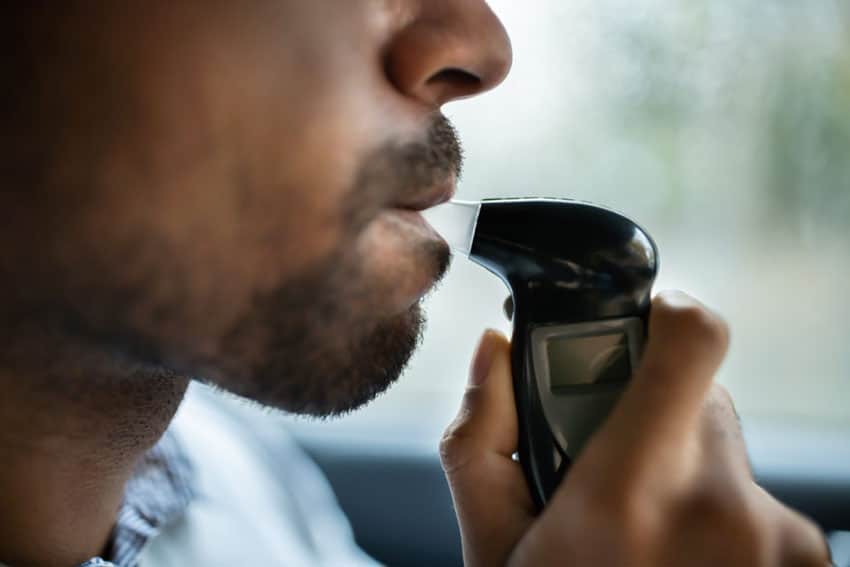
The handheld breathalyzer used at the roadside — before arrest — is called a Portable Breath Test. Its results are generally not admissible as evidence of your specific BAC at trial, but they can be used to establish probable cause for an arrest. If the PBT shows any reading, it becomes one more item on the officer’s list. Breathalyzer accuracy is actually one of the most contested issues in DWI defense — and understanding why matters if you’re facing a charge.
What “Probable Cause” Actually Has to Look Like
No single factor on this list is guaranteed to be enough on its own. Probable cause is evaluated based on the totality of the circumstances — everything the officer observed, combined. Under VTL § 1192, the odor of alcohol plus slurred speech plus a positive PBT plus poor FST performance creates a much stronger probable cause basis than any one of those factors alone.
This matters for your defense because if the totality doesn’t actually meet the legal standard, the arrest may be unlawful. And if the arrest is unlawful, everything obtained after that point — including the official breathalyzer result at the station, the blood test, and all subsequent observations — can potentially be suppressed.
Why This Matters for Your Defense
The probable cause requirement isn’t a formality. Challenging whether the arrest was justified is one of the most effective strategies in DWI defense because suppressing the evidence that follows an unlawful arrest can gut the prosecution’s case entirely.
Your attorney will examine the officer’s written report, request dashcam and bodycam footage, and cross-examine the officer about exactly what they observed and when. If the stated basis for the arrest doesn’t match the video — or if the observations the officer claims aren’t supported by the footage — a motion to suppress can remove the most damaging evidence from the case.
This isn’t exploiting a loophole. It’s holding the government to the constitutional standard that exists to protect everyone from being arrested without sufficient justification.
This article is for general informational purposes and does not constitute legal advice. Every DWI case involves unique facts. If you’ve been charged with DWI or DWAI-Drugs in New York, speak with a DWI defense attorney who can evaluate the specifics of your stop and arrest.