




No — the Portable Breath Test (PBT) at the roadside is not mandatory under New York’s Implied Consent law, and refusing it does not trigger an automatic license revocation. But there are real consequences to understand before making that decision.
What the PBT Actually Is
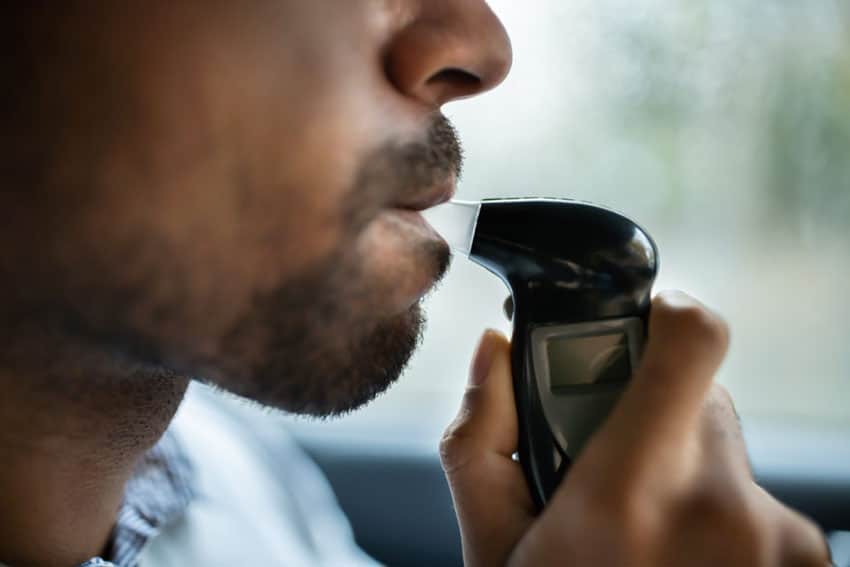
The PBT is a small, handheld device — often called an alcosensor — that officers use on the roadside before making an arrest. Its purpose is to establish probable cause. It is not the same as the official chemical breathalyzer at the police station, and the results are treated very differently by the courts.
| Portable Breath Test (PBT) | Chemical Test at Station (DataMaster/Breathalyzer) | |
|---|---|---|
| When administered | Roadside, before arrest | Police station, after arrest |
| Covered by Implied Consent? | No | Yes |
| Mandatory to take? | No | No — but refusal triggers serious penalties |
| Admissible as BAC evidence at trial? | Generally no — not to prove specific BAC | Yes — core evidence in prosecution |
| Purpose | Establish probable cause for arrest | Prove intoxication at trial |
| Consequence of refusal | Traffic ticket (VTL §1194(1)(b)) | Minimum 1-year license revocation + $500 civil penalty |
The distinction matters enormously. The chemical test at the station is covered by New York’s Implied Consent law under VTL §1194 — by driving in New York, you’ve already consented to that test after a lawful arrest. The PBT is a pre-arrest investigative tool that sits outside that framework entirely.
What Happens If You Refuse the PBT
Refusing the PBT is not consequence-free. Under VTL §1194(1)(b), refusal to submit to a preliminary breath test results in an additional traffic ticket — a separate violation on top of anything else being investigated. It’s not a license revocation, but it is documented, goes on your driving record, and signals to the officer that you’re not cooperating.
Officers will frequently interpret PBT refusal as a sign of consciousness of guilt — the same legal principle addressed in self-incrimination cases that makes chemical test refusal usable as evidence at trial. You won’t lose your license for declining the PBT, but the officer will almost certainly arrest you anyway, and the refusal itself becomes part of the documented picture of the stop.
Why the PBT Result Isn’t the End of the Story
One thing people misunderstand: blowing a number on the PBT doesn’t determine your fate. The PBT result is generally not admissible to prove your specific BAC in a criminal trial — it can only be used to establish probable cause for the arrest, not as proof of intoxication. The prosecution’s BAC evidence comes from the station test, not the roadside device.
This is why the PBT refusal calculation is different from the station test calculation. Refusing the PBT means avoiding an early reading that might cement the officer’s decision to arrest — but the officer will likely arrest you regardless, based on other observations. Then you’ll face the station test decision anyway, where the consequences are significantly higher: the NY DMV’s penalty schedule shows a minimum one-year license revocation for chemical test refusal, plus a $500 civil penalty — penalties that apply even if you’re acquitted of the underlying DWI charge.
The Sequence Matters
Understanding where the PBT fits in the overall stop clarifies the decision:
- Officer observes signs of impairment (odor, driving behavior, physical appearance)
- Field sobriety tests administered — voluntary in New York, no license penalty for refusal, but refusal can be noted
- PBT requested — voluntary under Implied Consent law, but refusal = VTL §1194(1)(b) traffic ticket
- Arrest decision made — based on FSTs, PBT result or refusal, and officer observations
- Chemical test at station — covered by Implied Consent, refusal = minimum 1-year revocation
If you’re at step 3, the arrest decision has essentially already been made in the officer’s mind based on steps 1 and 2. The PBT either confirms or complicates that decision — it rarely reverses it.
What This Means If You’re Facing a First Offense
For someone facing a first offense DWI, the distinction between the PBT and the station test matters when building a defense. If the PBT was the only instrument used, or if the station test was administered outside the two-hour window, or if there were procedural issues at either step, those are all legitimate areas for a defense attorney to examine. What it means for your case depends heavily on what happened at each stage of the stop and what evidence the prosecution actually has.
Under NY DCJS guidelines, the chemical test — not the PBT — is the evidentiary foundation for a DWI charge. Understanding that distinction is the starting point for any defense analysis.
If you find yourself in a situation where any of these decisions were made, and you’re now facing charges, knowing what to do after a DWI and choosing the right defense attorney are the two decisions that matter most going forward.
Our DWI defense team can walk you through what the facts of your specific stop actually mean and how to approach the case.
Disclaimer: This overview is for informational purposes only and does not constitute legal advice. Every case is unique — contact our DWI defense team for personalized guidance.