





Yes — and it happens more often than most people expect.
In New York, a valid prescription does not protect you from a DWAI-Drugs charge. The law focuses entirely on whether the drug impaired your ability to drive, not whether you had a legal right to take it. If a medication — prescribed by your doctor, taken exactly as directed, legally purchased at a pharmacy — caused any degree of impairment while you were behind the wheel, you can be charged.
Why a Prescription Is Not a Defense
This surprises a lot of people. The intuitive logic is: if my doctor prescribed it, and I took it as directed, I’m in the clear. New York law doesn’t work that way.
VTL § 1192(4) makes it a crime to operate a motor vehicle while one’s ability is impaired “to any extent” by the use of a drug. The statute doesn’t distinguish between legal and illegal substances. What matters is whether the drug affected your driving — and by how much.
Courts have repeatedly upheld DWAI-Drugs convictions involving legally prescribed medications. The prescription is evidence that you had authorization to use the substance. It’s not evidence that you weren’t impaired when you drove.
What Kinds of Medications Are Commonly Involved
The medications that most often appear in DWAI-Drugs cases aren’t exotic. They include common drugs that millions of people take daily:
| Medication Type | Common Examples | Why It’s a Risk |
|---|---|---|
| Opioid pain relievers | OxyContin, Percocet, Vicodin, hydrocodone | Causes drowsiness, slowed reaction time, impaired coordination |
| Benzodiazepines | Xanax, Valium, Ativan, Klonopin | Sedation, confusion, slurred speech, balance issues |
| Sleep aids | Ambien, Lunesta, Benadryl | Residual sedation can persist well into the next day |
| Muscle relaxants | Flexeril, Soma, Robaxin | Drowsiness, dizziness, impaired motor control |
| Antihistamines | Benadryl, NyQuil, and older allergy medications | “Non-drowsy” formulas are less risky; older formulas cause significant sedation |
| ADHD medications | Adderall, Ritalin (in high doses or misuse) | Can affect judgment and perception at elevated doses |
| Anti-seizure medications | Neurontin, Lyrica, Topamax | Cognitive impairment, dizziness, coordination issues |
| Anti-anxiety medications | Buspirone, hydroxyzine | Drowsiness and impaired reaction time |
Over-the-counter drugs aren’t exempt. A double dose of NyQuil before a short drive, a Benadryl taken for allergies an hour before getting behind the wheel — these can produce impairment that an officer will observe and document. The NHTSA specifically identifies opioids, sedatives, muscle relaxants, and antihistamines as medications associated with increased crash risk.
New York asks one question about your medication: did it impair your driving.
VTL 1192(4) covers impairment to any extent by any drug, including one your doctor prescribed and you took exactly as directed. These cases usually turn on what a Drug Recognition Expert observed and whether that observation holds up. The DWI Team handles DWAI-Drugs charges.
Get a Free Case Analysis → See how we defend DWAI charges →How These Cases Typically Start
A DWAI-Drugs prescription medication case usually doesn’t begin with a roadside drug test. It begins with an officer observing something that doesn’t add up.
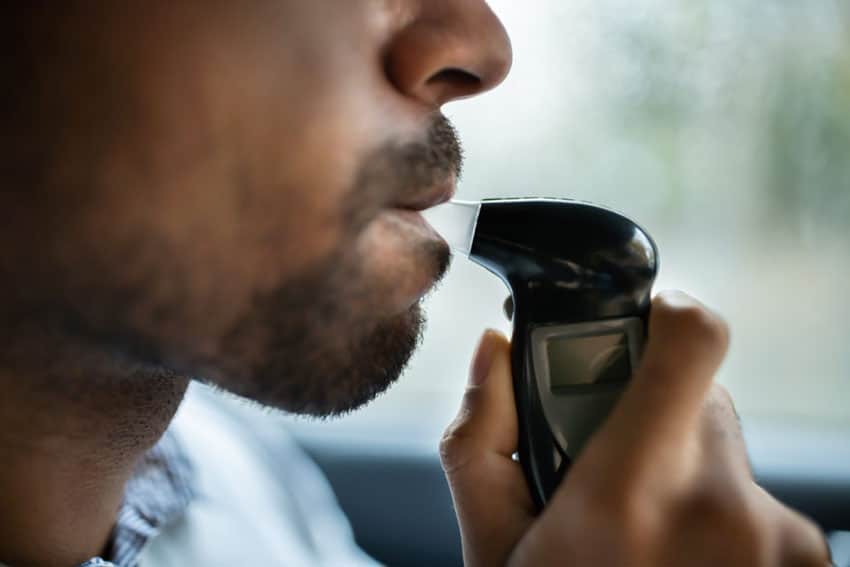
The driver may be weaving, driving unusually slowly, sitting too long at a green light, or responding sluggishly. The officer pulls the car over, and notices signs of impairment — drowsy eyes, slurred speech, slow reactions — but the roadside breath test comes back clean or very low. That gap is the trigger. When impairment is visible but alcohol doesn’t explain it, a Drug Recognition Expert (DRE) is typically called in to conduct a more thorough evaluation.
If you disclosed your medications during the stop — or if your medications were visible in the car — that information becomes part of the case. These are the same patterns that arise in marijuana and driving cases, where impairment is observed but no BAC reading exists.
The Warning Label Test
The most practical way to think about this: if your medication’s label warns against operating heavy machinery or driving, and you drove anyway, you were on notice of the risk. That doesn’t make a conviction automatic, but it removes any claim that you didn’t know impairment was possible.
Many people don’t read medication labels carefully, or they assume the warnings are overly cautious. From a legal standpoint, those warnings exist precisely to put patients on notice — and courts know it.
If you start a new prescription, it’s worth waiting to drive until you understand how your body responds to it. Side effects often hit hardest in the first few days and decrease as your system adjusts. Under the 2026 DMV point system changes, a DWAI-Drugs conviction now automatically carries 11 DMV points — the highest single-incident value the DMV assigns — adding a significant administrative consequence on top of any criminal penalties for drug-related violations.
Defending a Prescription DWAI-Drugs Charge
Because these cases rely on subjective observation rather than a BAC number, they typically have more defensible elements than a standard alcohol DWI. The central issues in a prescription DWAI-Drugs case often include:
Whether the officer’s observations actually reflected impairment rather than a medical condition, fatigue, anxiety from the stop, or other non-drug causes. Whether the DRE evaluation was properly conducted and the evaluator reached their conclusion through the required steps. Whether the toxicology results show only the presence of the drug — not necessarily impairment at the time of driving, which is a different standard. Whether the concentration of the drug in your system was consistent with therapeutic dosing or indicated something more.
These defense angles are broadly similar to those available in any DWAI-Drugs case or DUID charge. If the charge escalates to a repeat offense, it can become a felony DWAI. Understanding what to do immediately after an arrest can preserve options that disappear if you wait.
An experienced DWI defense attorney who handles drug cases understands where these fact patterns are vulnerable — and a prescription DWAI-Drugs case often has more angles to work with than a straightforward BAC reading. For a first-time charge specifically, reviewing the first offense DWI penalties and options gives a useful baseline for what’s at stake.
This article is for general informational purposes and does not constitute legal advice. Every case is different — contact our DWI defense attorneys for guidance specific to your situation.
You followed the label and still ended up charged.
Prescription DWAI-Drugs cases rest on officer observation and a drug recognition evaluation rather than a BAC number, which leaves a great deal open to examination. The DWI Team reviews what was recorded and works to reduce or dismiss the charge.