





There’s no single “best” DWI defense. The right strategy depends entirely on the facts of your arrest — how the stop happened, how you were tested, what the officer did or didn’t do, and what the evidence actually shows. What there is, though, is a reliable set of legal arguments that our attorneys examine in every case to find the openings the prosecution doesn’t want you to know about.
Here are the ten defenses that come up most often, and what they actually mean for your case.
The 10 Most Common DWI Defenses
| Defense | What It Targets |
|---|---|
| Lack of Probable Cause | The stop or arrest itself |
| Improper Field Sobriety Testing | How the FSTs were administered |
| Faulty Breathalyzer Calibration | The reliability of the BAC reading |
| Mouth Alcohol Contamination | False elevation of BAC results |
| Medical Conditions | Alternative explanations for test results |
| Violation of the Two-Hour Rule | Timing of the chemical test |
| Rising BAC | BAC at time of driving vs. time of test |
| Failure to Observe the 15–20 Minute Period | Pre-test observation requirements |
| Miranda or Constitutional Violations | Admissibility of statements |
| Chain of Custody Errors | Blood/urine sample integrity |
1. Lack of Probable Cause
This is often the most powerful defense available. What gives police probable cause to stop and arrest you is a strict legal standard — not a hunch, not a feeling. The Fourth Amendment requires reasonable suspicion to pull you over and probable cause to arrest you. If either is missing, all evidence gathered after that point can be suppressed — including your BAC. Without a BAC, most DWI prosecutions collapse.
Police cannot randomly stop vehicles to check for impairment outside of a properly conducted checkpoint. If your stop doesn’t hold up legally, neither does the case.
2. Improper Field Sobriety Testing
Field sobriety tests are standardized for a reason — officers are required to follow specific protocols, explain each test clearly, and conduct them on safe, level ground. Deviations matter. FST results are admissible in court, but so is evidence that they were administered improperly. Medical conditions, uneven pavement, poor lighting, footwear, and officer error all create grounds to challenge what the prosecution wants to use as proof of impairment.
It’s also worth knowing that you can refuse field sobriety tests in New York without any administrative penalty — which means that evidence may not even be in play.
3. Faulty Breathalyzer Calibration or Maintenance
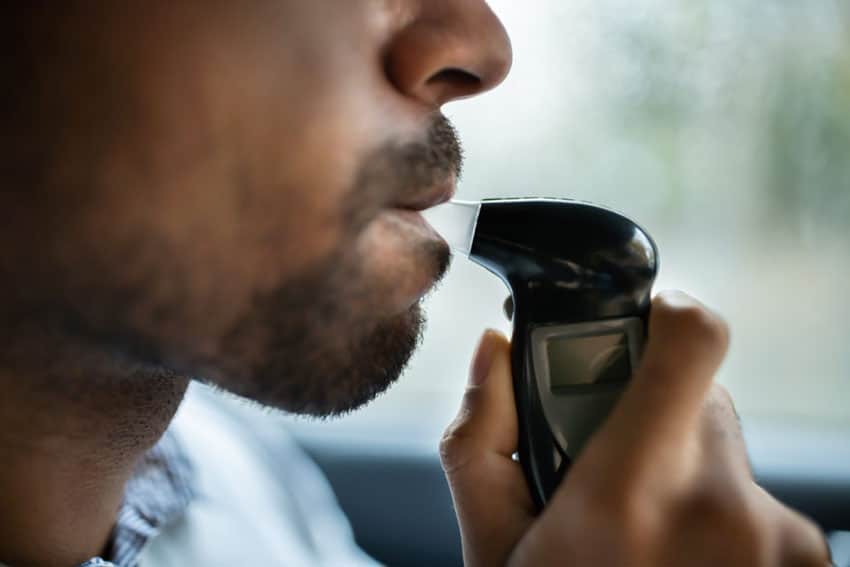
A breathalyzer reading feels like hard science, but it’s only as reliable as the machine producing it. Breathalyzers need to be accurate — and that requires regular calibration, proper maintenance, and certified operators. If the device’s service logs show missed calibration deadlines, improper certification, or equipment failures, the BAC reading may be inadmissible. When the prosecution’s per se case rests on a number from a compromised machine, the foundation of the case goes with it.
4. Mouth Alcohol Contamination
Alcohol from mouthwash, burping, acid reflux, or dental work can temporarily elevate the concentration of alcohol in your mouth, which is what a breathalyzer actually measures. That’s why officers are required to observe you for 15–20 minutes before testing. If they skipped or cut short that window, the result may be unreliable.
5. Medical Conditions Affecting Test Results
Certain medical conditions can produce compounds that breathalyzers misread as alcohol. Medications and health conditions can affect a breathalyzer reading — diabetes and low-carb diets can produce isopropyl alcohol, GERD can push stomach alcohol into a breath sample, and certain prescriptions interact with the testing chemistry. There’s also an important distinction between the types of chemical tests — breath, blood, and urine — and each has its own vulnerabilities for defense.
6. Violation of the Two-Hour Rule
Under New York VTL § 1194, which governs implied consent and chemical testing, a test must be administered within two hours of the arrest. If police delayed the test past that window — through processing delays, transport, or negligence — the results may be inadmissible.
7. Rising BAC Defense
Your BAC continues to rise after you stop drinking as alcohol is absorbed into your bloodstream. If there was a gap between when you were driving and when you were tested, your attorney can argue that your BAC was actually below the legal limit at the time of operation — even if it registered at or above 0.08% by the time the test was administered.
8. Failure to Observe the 15–20 Minute Period
Before administering a breathalyzer, officers are required to continuously observe the subject to confirm they didn’t eat, drink, smoke, vomit, or regurgitate — all of which can contaminate the breath reading. This observation must be documented. If it wasn’t done correctly, the test result can be challenged on contamination grounds.
9. Miranda or Constitutional Violations
Miranda warnings are required before custodial interrogation. If you weren’t advised that you could stay silent or have an attorney present before being questioned, any statements you made may be suppressed. Similarly, you have the right to refuse to answer police questions during a stop — and statements made before proper Miranda warnings can’t be used against you. A Miranda violation usually won’t dismiss a case on its own, but it removes damaging admissions from evidence.
10. Improper Chain of Custody or Evidence Handling
Blood and urine samples require careful handling — proper labeling, storage, refrigeration, and documented transfer between collection and the lab. If police obtained a blood draw without meeting the proper legal standard, or if the sample was mishandled anywhere along the chain, the test result’s integrity is in question. Gaps in documentation give your attorney grounds to challenge admissibility entirely.
One Defense Can Be Enough — But They Work Better Together
Each of these defenses can weaken the prosecution’s case on its own. A suppressed BAC or a thrown-out stop can effectively end a case before it reaches trial. But when multiple angles are combined — a borderline stop, an improperly observed breathalyzer, and a rising BAC argument — the prosecution’s burden of proof becomes significantly harder to meet.
The DWI TEAM examines every step of the arrest process, from the initial stop to the chain of custody on any chemical sample, to find where law enforcement’s case has gaps. The right defense isn’t guesswork — it comes from knowing what to look for.
Disclaimer: This overview is for informational purposes only and does not constitute legal advice. Every case is unique — contact a DWI defense attorney for personalized guidance.