





When police investigate a DWI in New York, they have three types of chemical tests they can use to measure impairment: breath, blood, and urine. They’re not interchangeable. Each is used in different situations, each produces different evidence, and each carries a different weight in court.
Here’s what you actually need to know about each one.
The Three Types of Chemical Tests
| Test Type | How It Works | When It’s Used | Admissible as BAC Evidence? |
|---|---|---|---|
| Breath (Breathalyzer) | Measures alcohol vapor in exhaled breath, converts to estimated BAC | Most DWI arrests — standard at the station post-arrest | Yes — most common form of BAC evidence |
| Blood | Lab analysis of a drawn blood sample | When a breath test is unavailable, refused, or impractical, accidents with injuries | Yes — most accurate, highly admissible |
| Urine | Lab analysis of a urine sample | DWAI-Drugs cases; when drugs (not alcohol) are suspected | Yes — but less common for alcohol; primarily used for drug detection |
Breath Testing: The Most Common Option
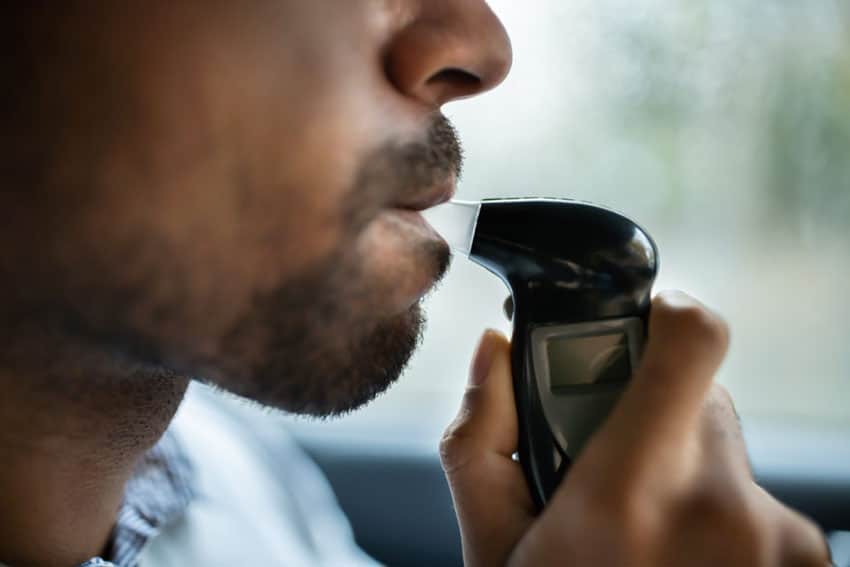
The breathalyzer — specifically the station machine (not the roadside handheld device) — is what police use in the vast majority of DWI arrests. In New York, the station machine is typically a DataMaster or similar instrument approved by the NY Department of Health’s Breath & Blood Alcohol Testing program. You breathe into it, it measures alcohol concentration in your breath, and that reading is converted into an estimated blood alcohol content.
That conversion is worth understanding. The machine isn’t testing your blood directly — it’s estimating your BAC based on a formula. That formula assumes a fixed ratio of alcohol in breath to alcohol in blood, and that assumption doesn’t hold perfectly for every person in every situation. It’s one of the reasons breathalyzer accuracy can be challenged in court.
One important distinction: the portable breath test (PBT) — the small handheld device the officer may use at the roadside before your arrest — is a different instrument entirely. Its result is generally not admissible as evidence of your specific BAC at trial. Its only legal purpose is to give the officer probable cause to make the arrest. The official chemical test at the station is what actually counts.
Under New York’s implied consent law, if you’ve been lawfully arrested, you’re required to submit to this test. Refusing carries its own separate penalties — a mandatory minimum one-year license revocation, a $500 civil fine, and the refusal itself being used as evidence against you in court.
Blood Testing: The Most Accurate Option
A blood test requires a medical professional to draw a sample, which is then sent to a lab for analysis. It’s more accurate than breath testing because it directly measures alcohol concentration in the blood rather than estimating from breath vapor.
Police typically turn to a blood test when the breath test machine isn’t available, when the arrested person has a medical condition that makes breath testing impractical, or when a serious accident has occurred and a warrant for a blood draw is obtained. The U.S. Supreme Court established in Missouri v. McNeely that the natural dissipation of alcohol in the bloodstream does not automatically justify a warrantless blood draw in a routine DWI stop.
The tradeoff is time and logistics — and those matter legally. New York requires that a chemical test be administered within two hours of arrest to be admissible as BAC evidence at trial. Delays in getting a blood draw can create a defense argument if the two-hour window is missed or is close. This is especially relevant if you’ve been charged in connection with an accident.
You cannot demand a blood test instead of the breath test the officer offers. However, if you submit to the official test, New York law gives you the right to arrange an independent blood test at your own expense immediately afterward. Defense attorneys often use this to challenge the official reading.
Urine Testing: Primarily for Drug Cases
Urine tests are rarely used to establish alcohol intoxication in a standard DWI case — breath and blood are simply more accurate for that purpose. Where urine testing becomes more relevant is in DWAI-Drugs cases, where police are looking for the presence of drugs rather than measuring an alcohol level.
A urine test can confirm the presence of a substance in your system, but it has a significant limitation: it can detect that a drug was present, but it cannot reliably establish how impaired you were at the time of driving. Marijuana, for example, can remain detectable in urine for weeks after use — long after any actual impairment has worn off. That gap between “detected” and “impaired at the time” is particularly relevant given New York’s current marijuana and driving laws, and it’s where defense attorneys often work.
What This Means for Your Case
The type of test used affects how the prosecution builds its case — and how it can be challenged. Breath test results can be attacked on calibration, operator error, and mouth alcohol contamination. Blood test results can be challenged on the chain of custody and lab handling procedures. Urine test results can be questioned on timing and the detection vs. impairment distinction.
If you’re facing a first offense DWI in New York, understanding which test was used and how it was administered is one of the first things a DWI defense attorney will review. Depending on the outcome, your ability to get a conditional license — and whether the charge is treated as a misdemeanor or something more serious — can hinge directly on what happened during the testing phase.
This article is for general informational purposes and does not constitute legal advice. Every case is different — contact our DWI attorneys in New York for guidance specific to your situation.