




If you’ve ever come around a bend at night and seen flashing lights and traffic cones funneling cars into a single lane, you know the feeling. Your stomach drops a little—even if you haven’t had a single drink. DWI checkpoints can feel intimidating, but knowing your rights ahead of time makes all the difference between a quick, uneventful stop and a situation that spirals out of control.
Here’s the short version: DWI checkpoints are legal in New York, but that doesn’t mean you give up your constitutional rights the moment you roll down your window.
Are DWI Checkpoints Actually Legal?
Yes. The U.S. Supreme Court ruled in Michigan Dept. of State Police v. Sitz (1990) that DWI checkpoints do not violate the Fourth Amendment—as long as police follow strict operational guidelines. New York courts have upheld this consistently.
That said, law enforcement can’t just set up shop wherever they feel like it. To be constitutional, a checkpoint must follow a predetermined, non-arbitrary pattern for stopping vehicles. If police are picking and choosing who to stop based on hunches, that’s not a legitimate checkpoint—it’s a random stop, which requires reasonable suspicion.
What You’re Required to Do at a Checkpoint
Let’s start with what you must provide:
| Required | Details |
|---|---|
| Driver’s license | Hand it over when asked |
| Vehicle registration | Keep it accessible |
| Proof of insurance | Have your insurance card ready |
That’s pretty much it. You’re required to identify yourself and show your documents. Beyond that, you have significantly more protection than most people realize.
What You Can Legally Refuse
This is where it gets important. Even at a DWI checkpoint, you keep several key rights:
You Can Stay Silent
You are not required to answer questions about where you’ve been, where you’re going, or whether you’ve been drinking. A polite “I’d prefer not to answer questions” is perfectly legal. The officer may not love hearing it, but your right to remain silent doesn’t disappear at a checkpoint.
You Can Refuse Field Sobriety Tests
The walk-and-turn, one-leg stand, and horizontal gaze nystagmus test are all voluntary in New York. You can refuse field sobriety tests without facing the same automatic penalties that come with refusing a chemical test. These tests are subjective, often performed under terrible conditions (uneven pavement, flashing lights, nerves), and the results are regularly used against you at trial.
You Can Refuse the Portable Breath Test (PBT)
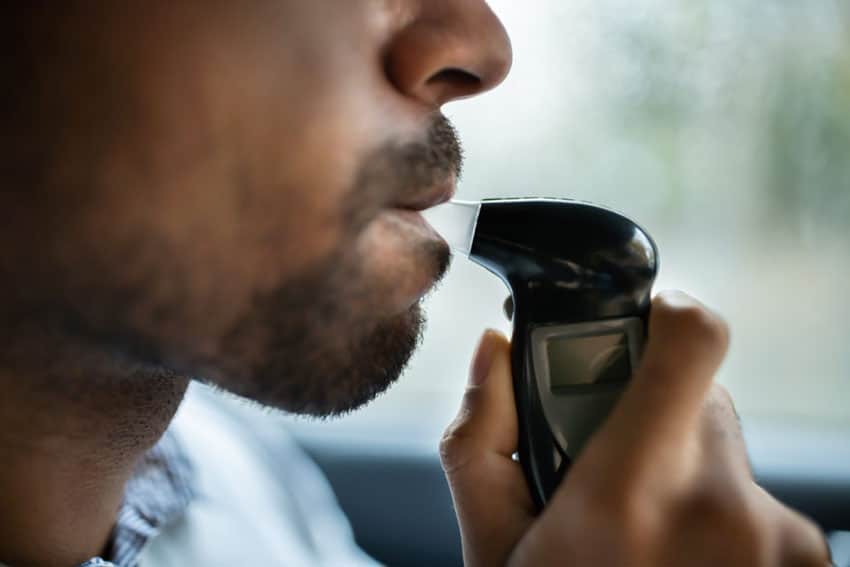
The small handheld device an officer might ask you to blow into at the roadside is a portable breath test. Refusing the PBT does not trigger an automatic license revocation. Its results aren’t typically admissible as evidence of your specific BAC in criminal court anyway.
You Can Refuse the Chemical Test—But There Are Consequences
Here’s where implied consent comes into play. Under New York Vehicle and Traffic Law § 1194, by driving on New York roads, you’ve already agreed to submit to an official chemical test (breath, blood, or urine) after a lawful arrest. You can still refuse, but refusing a chemical test triggers:
- An automatic one-year license revocation
- A $500 civil penalty
- Loss of eligibility for a conditional license
- The prosecution is using your refusal as evidence of “consciousness of guilt.”
These penalties are administrative—they apply regardless of whether you’re ever convicted of the underlying DWI charge.
How to Handle a DWI Checkpoint: A Quick Game Plan
Knowing your rights is one thing. Putting them into practice when your heart is pounding is another. Here’s a straightforward approach:
Stay calm and pull forward slowly. Follow the officer’s hand signals and keep your hands visible on the steering wheel.
Have your documents ready. License, registration, and insurance. Fumbling through your glove compartment while an officer watches isn’t a great look, even if it means nothing legally.
Be polite but firm. You can decline to answer investigatory questions without being rude about it. A simple “I’d prefer to speak with my attorney before answering any questions” works. If the officer asks you to step out of the vehicle, you do need to comply—that’s a lawful order for officer safety purposes.
Don’t consent to a vehicle search. If an officer asks to search your car, you should politely say, “I do not consent to any search.” If they have independent probable cause, they can search without your permission—but by refusing, you preserve your right to challenge that search later in court.
What If You’re Arrested at a Checkpoint?
If an officer decides there’s enough evidence to arrest you at a checkpoint, the process moves forward just like any other DWI arrest. You’ll be taken to the station for an official chemical test, and at that point, your decision to take or refuse the breathalyzer becomes one of the most consequential choices in your case.
After the arrest, you have the right to speak with a lawyer before deciding on the chemical test—though police aren’t required to wait indefinitely for you to make that call.
Remember: an arrest is not a conviction. There are real defenses available—from challenging whether the checkpoint itself was properly conducted to questioning the accuracy of any breathalyzer results.
Your Rights at a Glance
| Action | Can You Refuse? | Penalty for Refusal |
|---|---|---|
| Answering questions about drinking | Yes | None |
| Field sobriety tests (walk-and-turn, etc.) | Yes | None (automatic) |
| Portable breath test (PBT) at roadside | Yes | Traffic ticket possible, no license revocation |
| Official chemical test after arrest | Yes | 1-year license revocation + $500 fine |
| Vehicle search (without probable cause) | Yes | None |
| Exiting the vehicle when ordered | No | Potential obstruction charge |
The Bottom Line
A DWI checkpoint isn’t something to panic over. You hand over your documents, stay polite, and exercise your rights. The officers are doing their job, and you’re allowed to protect yourself at the same time.
If you do get arrested at a checkpoint—or anywhere else—the moves you make in those first few hours matter a lot. The earlier you get legal guidance, the more options you’ll have.
Disclaimer: This overview is for informational purposes only and does not constitute legal advice. Every case is unique—contact our New York DWI lawyers for personalized guidance.