




Yes — and in most circumstances, refusing is the better choice.
Both the Walk-and-Turn (WAT) and the One-Leg Stand (OLS) are voluntary performance tests. Unlike refusing the official breathalyzer at the station, declining these roadside tests carries no mandatory administrative penalties — no automatic license suspension, no civil fine, nothing. The right to refuse them exists clearly, and exercising it doesn’t require explanation or justification.
Here’s what these tests actually involve, how they’re scored, and why performance evidence is so damaging compared to a straightforward refusal.
What the Walk-and-Turn Test Involves
The Walk-and-Turn test is a divided attention test — the officer is evaluating both your ability to follow instructions and your physical coordination simultaneously, which they view as a combined indicator of impairment.
The procedure: the officer instructs you to take nine heel-to-toe steps along a straight line (real or imagined), turn in a specific, prescribed manner, and take nine heel-to-toe steps back. You’re required to keep your arms at your sides, watch your feet, count the steps aloud, and not stop once you begin.
Officers are trained to score eight specific clues during the WAT:
| Clue | What the Officer Watches For |
|---|---|
| Cannot keep balance during instructions | Stepping off the line, using arms, swaying |
| Starts before instructions are finished | Beginning before the officer says to go |
| Stops while walking | Pausing during the sequence |
| Doesn’t touch heel-to-toe | Gap of more than half an inch between steps |
| Steps off the line | Foot lands outside the line |
| Uses arms for balance | Arms raised more than 6 inches from sides |
| Improper turn | Loses balance, pivots incorrectly |
| Wrong number of steps | Takes more or fewer than nine steps |
Finding two or more clues is considered indicative of impairment at or above 0.08% BAC according to NHTSA research, though that threshold has been contested in courts.
What the One-Leg Stand Test Involves
The One-Leg Stand is a balance and counting test. You’re instructed to raise one foot approximately six inches off the ground, keep your arms at your sides, and count aloud (“one-thousand-one, one-thousand-two…”) until the officer tells you to stop, typically for 30 seconds.
Officers score four clues on the OLS:
| Clue | What the Officer Watches For |
|---|---|
| Swaying | Side-to-side or front-to-back movement while balancing |
| Uses arms for balance | Arms raised more than 6 inches from sides |
| Hopping | Moving the support foot to maintain balance |
| Puts foot down | Lowering the raised foot before being told to stop |
Two or more clues are again considered potentially indicative of impairment.
Why These Tests Are Inherently Unreliable
The fundamental problem with both the WAT and OLS is that they’re designed to be difficult for impaired people — but they’re also difficult for many perfectly sober people, particularly in the conditions of a roadside DWI stop.
Consider what you’re actually being asked to do. You’ve been pulled over at night or in poor light. You’re anxious. You may be in dress shoes, heels, or work boots. The surface might be gravel, a slope, or cracked pavement. You have police lights flashing behind you. You’ve never been told exactly what the “correct” performance looks like. And you’re performing in front of an officer who is specifically looking for failure.
NHTSA’s own validation studies acknowledge that the WAT has a false positive rate — meaning sober drivers fail it. Age, weight, injuries, inner ear conditions, back or knee problems, and neurological conditions can all affect balance and coordination in ways that produce the same clues the officer is scoring for impairment.
If you perform these tests, every deviation from the protocol goes into the officer’s report and, if there’s dashcam or bodycam footage, into the video record. That footage is then used at trial. Your attorney can cross-examine the officer’s interpretation of your performance, but the underlying evidence — you on camera, struggling to balance on a roadside at 1 AM — is extremely difficult to neutralize.
If you decline, that evidence doesn’t exist.
What Happens If You Refuse
The officer will almost certainly note the refusal in their report. Depending on the officer, they may describe it as uncooperative, or they may simply document it factually. In some cases, a refusal will contribute to the probable cause analysis that leads to your arrest.
That last point is important to acknowledge: refusing the WAT and OLS does not prevent an arrest. If the officer has enough from their observations, the smell of alcohol, the traffic stop itself, the HGN result, or other factors, they can and will arrest you regardless. The refusal doesn’t create a legal barrier to arrest.
What it does is remove the most potentially damaging evidence from the picture. A prosecution without video footage of you failing a balance test is a weaker prosecution than one with it. That trade-off — possible arrest anyway, but without performance evidence — is precisely why refusal is often the better position.
Knowing what to say when asked to perform the tests matters. Politely declining is not the same as being argumentative or uncooperative. You state clearly that you are choosing not to perform the tests, and that’s the end of it.
The Contrast With the Breathalyzer and Portable Breath Test
It’s worth being specific about what the no-penalty rule does and doesn’t cover, because the roadside testing landscape has three distinct elements.
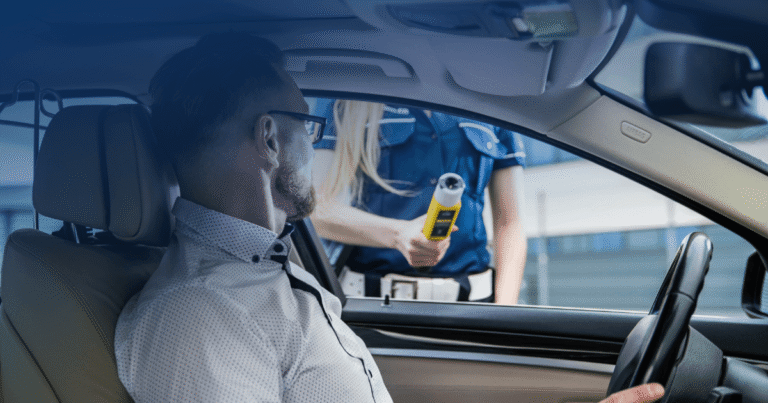
The portable breath test (PBT) — the small handheld device used at the roadside before arrest — is also refusable without administrative license penalties. Its results generally aren’t admissible as BAC evidence at trial.
The official chemical test at the station (the DataMaster breathalyzer, or a blood or urine test after arrest) is an entirely different matter. Refusing that test triggers a mandatory minimum one-year license revocation and a $500 civil penalty under New York’s implied consent law. That’s the refusal with teeth — not the FST refusal.
The WAT and OLS sit in the “voluntary, no administrative penalty for refusal” category alongside the PBT. Understanding where those lines are is fundamental to making informed decisions at every stage of a DWI stop.
After the Tests — or After Refusing
Whatever happened at the roadside, what happens after your arrest follows its own sequence. If you performed the tests, your attorney will examine the video footage, challenge the officer’s scoring methodology, and identify any protocol failures. If you refused, your attorney is working from a leaner evidence set on the subjective performance side.
Either way, speaking with an attorney before the chemical test at the station remains the most critical thing you can do. The decisions made in those first hours — what you said, whether you performed the FSTs, how you responded to the chemical test request — shape the case that follows.
For the full protocol governing how these tests must be administered, the NHTSA Standardized Field Sobriety Testing manual sets out the required procedures. Officer deviations from that protocol — wrong surface, wrong instructions, improper demonstration — are independently challengeable whether you took the tests or not.
Disclaimer: This overview is for informational purposes only and does not constitute legal advice. Every case is unique — contact our DWI defense team for personalized guidance.