




If you’ve ever been pulled over or know someone who has, chances are the word “breathalyzer” has come up. It’s the device police use to estimate how much alcohol is in your system — and its reading can change the course of your entire night (and potentially your future). But how does a machine figure out what’s in your blood just by having you blow into a tube?
Here’s a plain-English breakdown of the science, the process, and — just as important — why these results don’t always tell the full story.
The Basic Science: How Alcohol Gets Into Your Breath
When you drink alcohol, it enters your bloodstream through your stomach and small intestine. As that alcohol-rich blood circulates through your lungs, some of it crosses into the tiny air sacs (called alveoli) and mixes with the air you’re about to exhale.
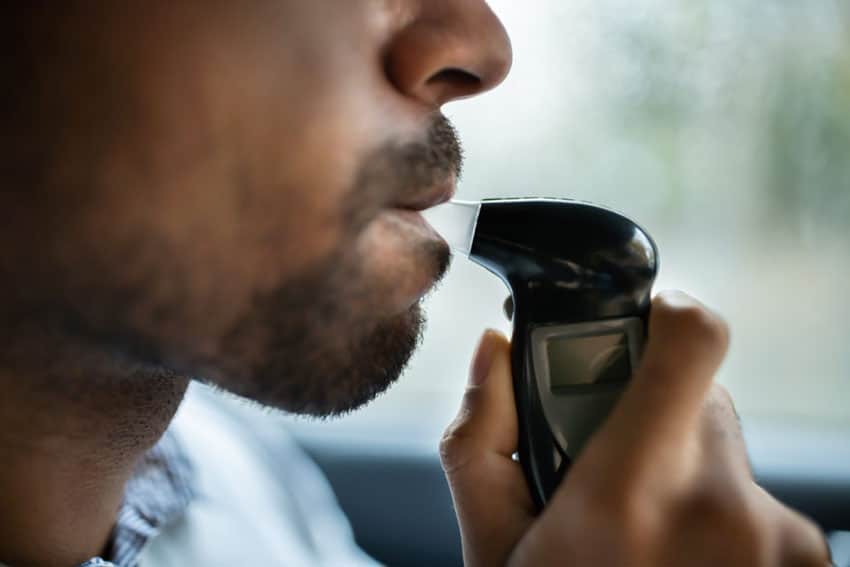
That’s the key concept: a small amount of alcohol leaves your body every time you breathe out. The amount depends on how long alcohol stays detectable on your breath, which varies based on several personal factors. A breathalyzer’s job is to measure the alcohol vapor and use it to estimate your Blood Alcohol Content (BAC).
How the Device Actually Measures Alcohol
Not all breathalyzers are created equal. There are two main types of detection technology used in modern devices:
| Detection Method | How It Works | Where It’s Used |
|---|---|---|
| Infrared (IR) Spectroscopy | Shines infrared light through your breath sample. Alcohol molecules absorb specific wavelengths of that light, and the device measures how much light was absorbed to calculate the alcohol concentration. | Station-based evidential machines (like the DataMaster or Intoxilyzer) |
| Fuel Cell Sensor | Uses an electrochemical reaction. Alcohol in your breath contacts a platinum electrode, triggering a chemical reaction that produces an electrical current. More alcohol means a stronger current. | Portable/roadside devices (PBTs) and some evidential models |
The station-based machines used in New York — typically the DataMaster — rely on infrared technology and must appear on the NHTSA Conforming Products List to be considered scientifically reliable for use in court.
Once the device has a measurement of your breath alcohol concentration, it applies a mathematical formula (a conversion ratio of approximately 2,100:1) to estimate what your BAC would be. In other words, it’s an indirect measurement — the machine never actually tests your blood.
The Roadside Test vs. The Station Test: They’re Not the Same
This is a distinction that matters more than most people realize. When an officer asks you to blow into a handheld device during a traffic stop, that’s a Preliminary Breath Test (PBT). It’s a screening tool — and in New York, the PBT result is generally not admissible as evidence of your specific BAC in a criminal trial. Its only legal role is helping establish probable cause for an arrest.
The official chemical test happens later, at the police station, on an evidential breath testing machine. Under New York’s implied consent law (VTL § 1194), you’ve already agreed to this test by having a driver’s license. That result IS admissible in court and becomes a critical piece of the prosecution’s case.
Why Breathalyzer Results Aren’t Always Accurate
Here’s where things get interesting from a defense standpoint. A breathalyzer reading is scientific evidence — but science is only as reliable as the conditions it’s performed under. There are several well-documented reasons why a reading might not reflect your true BAC — and we cover the full range in our post on whether breathalyzers are actually accurate:
Medical conditions like acid reflux (GERD) can push alcohol vapors from your stomach back into your mouth, causing the machine to read “mouth alcohol” on top of actual deep-lung air. The result? An artificially inflated number.
The 15–20 minute observation period is required before the test for exactly this reason. Officers must watch you continuously to make sure you don’t eat, drink, burp, or vomit — all things that could contaminate the reading. If the officer was distracted or left the room, the entire test result can be challenged.
Calibration and maintenance matter too. These machines must be regularly calibrated and serviced according to strict New York Department of Health standards. If maintenance logs show missed deadlines or improper servicing, the reliability of your results becomes questionable.
Other factors — including certain medications, low-carb diets that produce acetone (which some devices mistake for alcohol), dental work that traps alcohol residue, and even cell phone interference — can all play a role in producing inaccurate results.
What This Means If You’re Facing a DWI Charge
A breathalyzer reading is not the final word. It’s the starting point of a conversation — and a skilled DWI defense attorney will dig into every detail of how that number was produced. That includes examining the machine’s maintenance records, the officer’s training and certification, whether the observation period was followed, and whether any medical or environmental factors may have compromised the result.
If your BAC was borderline, the rising BAC defense may also apply — meaning your BAC may have been below the legal limit while you were actually driving, but rose by the time the test was administered at the station.
The bottom line: understanding how a breathalyzer works isn’t just interesting science trivia. It’s the foundation of how your DWI case can be fought.
Disclaimer: This overview is for informational purposes only and does not constitute legal advice. Every case is unique — contact our New York DWI lawyers for personalized guidance.