




It’s a question that crosses almost everyone’s mind after a night out: “If I got pulled over right now, would I pass a breath test?” The truth is, there’s no one-size-fits-all answer — but understanding how your body processes alcohol can help you make smarter decisions and avoid a situation that could change your life.
How Your Body Processes Alcohol
Your liver does the heavy lifting when it comes to breaking down alcohol. According to the National Institutes of Health, the liver metabolizes alcohol at a relatively steady rate — roughly one standard drink per hour. That rate doesn’t change much regardless of what you do. Coffee, cold showers, food after the fact — none of it speeds things up. Only time works.
So what counts as a “standard drink”? It’s smaller than most people think:
- 12 oz of regular beer (about 5% ABV)
- 5 oz of wine (about 12% ABV)
- 1.5 oz of hard liquor (about 40% ABV)
That means if you had four drinks between 8 PM and 10 PM — and how many drinks it takes to reach the legal limit varies widely by person — your body likely won’t finish processing all of that alcohol until well after midnight — and potentially into the next morning depending on your personal factors.
What Determines How Long Alcohol Stays Detectable?
While the one-drink-per-hour rule is a helpful baseline, your actual blood alcohol content (BAC) depends on several personal variables:
- Body weight and composition — A lighter person generally reaches a higher BAC faster than a heavier person drinking the same amount.
- Gender — Women typically reach higher BAC levels than men of similar weight because of differences in body water content.
- Metabolism and age — Younger, healthier livers tend to process alcohol more efficiently. As you age, that rate slows.
- Food intake — Drinking on an empty stomach means alcohol hits your bloodstream faster. Eating before or while drinking slows absorption, but it doesn’t reduce the total amount your body needs to process.
- Rate of consumption — Four drinks in one hour produces a much higher peak BAC than four drinks spread across four hours.
The bottom line: heavy drinking late at night can leave you impaired — or above the 0.08% legal limit — well into the next morning. It’s one of the most common ways people end up facing a DWI charge they never saw coming.
How a Breathalyzer Detects Alcohol
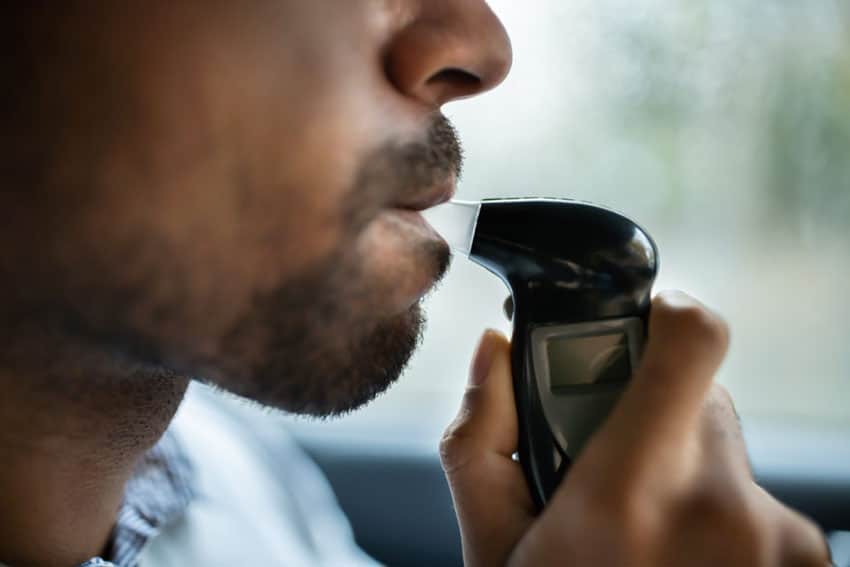
When you drink, alcohol enters your bloodstream and eventually reaches your lungs. As you exhale, small amounts of alcohol vapor leave your body in your breath. A breathalyzer measures the alcohol vapor and converts the reading into an estimated BAC percentage.
The official machines used at police stations — like the DataMaster — are sophisticated instruments that are regularly calibrated. But they’re not perfect. Factors like acid reflux, certain medications, and even residual mouth alcohol can affect readings, which is why police are required to observe you for 15 to 20 minutes before administering the test.
A breathalyzer can generally detect alcohol on your breath for up to 12–24 hours after heavy drinking, depending on how much you consumed. But a reading above the legally impairing threshold of 0.08% will typically clear faster than that — the key question is when it clears relative to when you’re tested.
New York’s Two-Hour Rule for Chemical Testing
Here’s where things get legally important. Under New York Vehicle and Traffic Law § 1194, the official chemical test used to establish your BAC must generally be administered within two hours of your arrest to be admissible as direct evidence of intoxication.
This is known as the “Two-Hour Rule,” and it exists because your BAC is constantly dropping after you stop drinking. The longer police wait to test you, the less reliable that number becomes as evidence of what your BAC was at the time you were actually driving.
If the police fail to administer the test within this window, a skilled defense attorney can challenge the admissibility of those results and potentially have them excluded from your case.
It’s also worth knowing that the chemical breath test at the station is different from the portable breath test (PBT) an officer might use on the roadside. The PBT result is generally not admissible in court to prove your BAC — its only legal purpose is to give the officer probable cause to arrest you. The official station test is the one that matters for your case.
What About the Morning After?
One of the biggest misconceptions is that a full night’s sleep guarantees you’re sober. If you were out drinking heavily until 1 AM, your BAC could still be above the legal limit at 7 AM when you’re heading to work.
Here’s a rough example: a 160-pound man who has six standard drinks between 9 PM and midnight might not fully metabolize all that alcohol until approximately 6 AM — and that’s under average conditions. Add in less favorable factors like lower body weight, fatigue, or certain medications, and that timeline stretches even further.
The NY DMV is clear: there is no quick method to become sober. The average rate your body processes alcohol is approximately one standard drink per hour, and nothing changes that.
So, When Is It Actually Safe to Drive?
The only truly safe answer is: when your BAC is zero, or after enough time has passed for your body to fully process every drink. The general rule of thumb is to wait at least one hour per standard drink after your last drink — but even that’s a guideline, not a guarantee.
If you had three drinks, waiting at least three hours after your last drink is a reasonable starting point. But the safest approach is always to use a rideshare service, designate a sober driver, or simply wait until the next morning. Your judgment about your own sobriety is one of the first things alcohol impairs, which makes self-assessment unreliable.
If you’ve been charged with DWI in New York — whether from a traffic stop or a morning-after situation — the details of how and when your BAC was tested matter enormously to your defense. Issues like the timing of the test, the accuracy of the breathalyzer, and whether proper procedures were followed are all areas where an experienced attorney can make a real difference.
Understanding how chemical tests work and what your rights are during the process is the first step toward protecting yourself. And if you’re ever unsure whether you’re okay to drive, you probably aren’t. Plan ahead, and you’ll never have to wonder.
Disclaimer: This overview is for informational purposes only and does not constitute legal advice. Every case is unique—contact a knowledgeable DWI attorney for personalized guidance.