




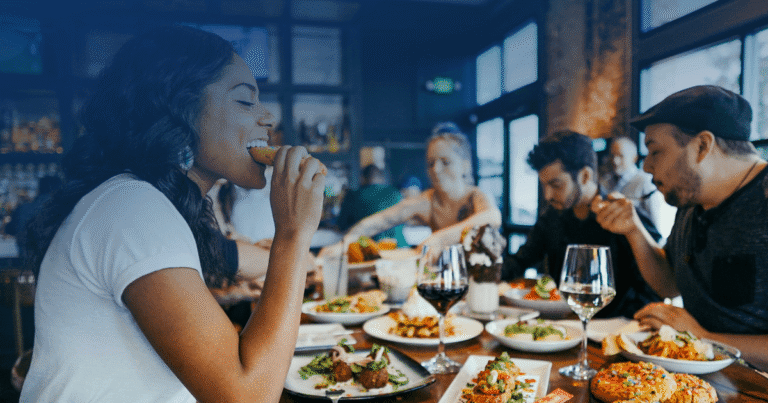
Yes — and it matters more than most people realize. Eating before or during drinking is one of the single biggest factors in how quickly alcohol hits your bloodstream and how high your Blood Alcohol Content (BAC) actually gets.
But here’s the part that trips people up: eating slows down alcohol absorption. It doesn’t stop it, and it won’t prevent you from reaching a BAC that lands you in legal trouble. If you’ve had enough to drink, food in your stomach just delays the inevitable. Your liver still has to process every drop of alcohol you consumed — food or no food.
How Food Actually Affects Alcohol Absorption
The science behind this is pretty straightforward once you understand how alcohol moves through your body.
When you drink on an empty stomach, alcohol passes quickly from your stomach into your small intestine. The small intestine is where the vast majority of alcohol absorption happens — roughly 80% of it. With nothing in your stomach to slow things down, alcohol floods into your bloodstream fast, causing a sharp, rapid spike in BAC.
When there’s food in your stomach — especially a meal with fat, protein, and carbohydrates — things change. Food triggers your pyloric valve (the gate between your stomach and small intestine) to close while digestion happens. That keeps the alcohol sitting in your stomach longer, where it gets partially broken down by stomach enzymes before ever reaching the small intestine. The result is a slower, lower rise in BAC.
| Scenario | What Happens | BAC Impact |
|---|---|---|
| Empty stomach | Pyloric valve closes, alcohol stays in the stomach longer | Rapid spike, higher peak BAC |
| Light snack | Slight delay in absorption | Moderate reduction in peak BAC |
| Full meal (fat + protein) | Pyloric valve closes, alcohol stays in stomach longer | Peak BAC can be up to 50% lower |
That “up to 50% lower” number comes from clinical research showing that consuming a full meal before drinking can cut peak BAC roughly in half compared to drinking on an empty stomach. That’s a significant difference — but it’s still a reduction, not an elimination.
What Type of Food Makes the Biggest Difference?
Not all food slows alcohol absorption equally. The factors that affect your BAC include not just whether you ate, but what you ate.
High-fat foods are the most effective at slowing absorption. Fat takes the longest to digest, which keeps the pyloric valve closed longer and delays alcohol’s trip to the small intestine. Think steak, cheese, avocado, or fried foods.
Protein-rich foods are a close second. Protein also extends digestion time and helps stabilize blood sugar, which can temper some of the cognitive effects of alcohol.
Complex carbohydrates (bread, pasta, rice) provide a moderate slowing effect. They absorb some alcohol and add bulk that delays gastric emptying.
Simple sugars and light snacks — crackers, chips, pretzels — provide minimal protection. They digest quickly and don’t keep the pyloric valve closed for long.
The ideal pre-drinking meal, from a pure absorption standpoint, would combine all three: fat, protein, and complex carbs. A burger, a plate of pasta with meat sauce, or a steak dinner would all fit the bill.
The Critical Misconception: Eating Doesn’t “Cancel” Alcohol
This is where the conversation gets important from a legal perspective. A lot of people think that a big dinner before heading out means they can drink more and still be fine to drive. That’s not how it works — and it’s one of the biggest myths about DWI laws and BAC levels that people believe.
Eating slows down how quickly your BAC rises. It can lower your peak BAC. But it doesn’t change the total amount of alcohol your body eventually absorbs and has to metabolize. Your liver processes alcohol at a fixed rate — roughly one standard drink per hour — regardless of what’s in your stomach. Food doesn’t speed that up.
So if you have four drinks over dinner versus four drinks on an empty stomach, the dinner scenario means your BAC rises more slowly and peaks lower. But you’re still absorbing all four drinks’ worth of alcohol. And if those four drinks put you at 0.08% or above, you’re facing a DWI charge whether you ate a five-course meal or skipped dinner entirely.
In New York, it’s worth remembering that charges don’t start at 0.08%. A BAC between 0.05% and 0.07% can result in a DWAI (Driving While Ability Impaired) charge, which carries a 90-day license suspension even though it’s technically a traffic infraction rather than a crime. And for drivers under 21, New York’s Zero Tolerance Law kicks in at just 0.02% BAC.
Why This Matters for DWI Defense
Here’s where eating before drinking becomes more than just a health tip — it can actually matter in a DWI case.
The rising BAC defense. If you ate a large meal and were drinking during or after dinner, your BAC may have still been rising between the time you were driving and the time the chemical test was administered at the station. An attorney can use expert testimony to argue that your BAC at the time of driving was below the legal limit, even though the station test showed otherwise. Food in your stomach can significantly delay your BAC peak, making this defense particularly relevant.
Breathalyzer accuracy issues. A full stomach can contribute to acid reflux or GERD symptoms, which can push alcohol vapors from your stomach back into your mouth. If the officer didn’t properly observe the required 15-20 minute waiting period before administering the breathalyzer, then mouth alcohol can produce a falsely elevated BAC reading.
Challenging impairment observations. Food affects not just BAC levels but also how impairment presents. Someone who ate a full meal may show fewer outward signs of impairment at the same BAC as someone who drank on an empty stomach, which can be relevant when challenging the officer’s observations during a traffic stop.
The Bottom Line
Eating before drinking is a smart safety decision. A full meal with fat, protein, and carbs can meaningfully reduce your peak BAC and slow down how quickly alcohol hits your system. But it’s not a get-out-of-jail-free card. The only guaranteed way to avoid a DWI is to not drive after drinking — period. For a practical guide to figuring out when it’s actually safe to drive after drinking, we break down the math and the common mistakes.
If you’re facing a DWI or DWAI charge in New York and food intake is relevant to your case, the DWI TEAM defense attorneys know how to use that fact in your defense. From rising BAC arguments to challenging breathalyzer accuracy, the details matter — and that’s exactly where our team operates.
According to the National Highway Traffic Safety Administration (NHTSA), over 12,000 people were killed in alcohol-impaired driving crashes in 2023. The safest plan is always a designated driver or a rideshare home.
Disclaimer: This overview is for informational purposes only and does not constitute legal advice. Every case is unique—contact our DWI defense team for personalized guidance.