





The short answer: accurate enough to be admitted as evidence in court — but not accurate enough to be treated as infallible. That distinction matters a lot if you’re facing a DWI charge in New York.
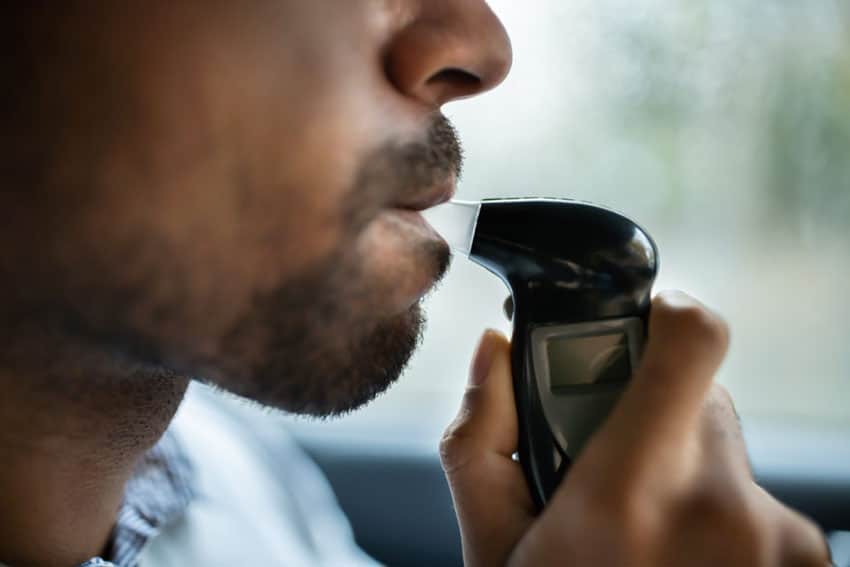
Breathalyzers don’t test your blood directly. They estimate your Blood Alcohol Content by measuring alcohol vapor in your exhaled breath and running it through a conversion formula. That estimation process has weak points, and a competent defense attorney will investigate every one of them.
What “Accurate Enough for Court” Actually Means
New York courts accept breathalyzer results as evidence of BAC, but they don’t treat those results as unquestionable. The prosecution uses the reading to prove a per se DWI — that your BAC was 0.08% or higher at the time of the stop. The defense can challenge the reliability of that reading through several well-established legal and scientific arguments.
The machine has to be properly calibrated and maintained. The officer has to follow the correct protocol. Specific medical conditions and outside factors have to be accounted for. When any of those requirements aren’t met, the result can be challenged — and in some cases, excluded from evidence entirely.
The Main Reasons Breathalyzer Results Can Be Wrong
Operator Error and the 15-Minute Observation Period
Before administering the official station breathalyzer, New York law requires the officer to continuously observe the suspect for a minimum of 15 to 20 minutes. The purpose is to ensure the person doesn’t eat, drink, smoke, burp, or regurgitate — all of which can cause residual alcohol in the mouth to contaminate the breath sample and artificially spike the reading.
If body camera footage or testimony shows the officer was distracted, left the room, or failed to complete this observation period, the breathalyzer result can be challenged as unreliable. This is one of the most common procedural issues defense attorneys investigate first. There’s an important distinction here, too: the roadside test (PBT) and the station-administered Chemical Breath Test (CBT) are two different things with different legal consequences — understanding that difference matters before you decide whether to comply or refuse.
Mouth Alcohol Contamination
The machine is designed to sample deep lung air — alveolar air — where the alcohol concentration reflects what’s actually in your blood. The problem is that alcohol can also be present in your mouth from other sources, and the machine can’t distinguish between the two.
Sources of mouth alcohol that can inflate a reading include recent drinking, mouthwash, burping, acid reflux, and dental work. This is why the observation period exists — but if it isn’t followed properly, mouth alcohol becomes a legitimate challenge. There’s an entire body of false positive breathalyzer case law built around exactly these issues, including dental appliances and medications that trap residual alcohol in the mouth.
GERD and Acid Reflux
Medical conditions like Gastroesophageal Reflux Disease (GERD) are a well-documented source of breathalyzer error. When someone with GERD has a reflux episode during or just before the test, stomach contents — including alcohol vapors — can come back up into the mouth and esophagus, producing a falsely elevated reading.
This isn’t an unusual defense argument. Courts recognize that GERD can affect results, and an attorney can use a client’s medical history to challenge whether the reading accurately reflected their actual BAC.
Calibration and Maintenance Failures
Breathalyzer machines used in New York must be regularly calibrated, maintained, and certified according to standards set by the New York State Department of Health’s Breath & Blood Alcohol Testing program. Specifically, 10 NYCRR §59.4 requires that only instruments on the NHTSA Conforming Products List be approved for use, and that calibration be performed at least annually per manufacturer guidance.
If the machine was overdue for calibration, improperly serviced, or operated by someone without proper certification, the results can be challenged. Defense attorneys routinely subpoena the machine’s maintenance logs and calibration records. If those records show missed deadlines, gaps in servicing, or certification issues, the foundation of the prosecution’s per se case can be significantly weakened.
Diabetes and Ketogenic Diets
Certain metabolic conditions and dietary states cause the body to produce compounds that some breathalyzers can misidentify as ethanol. Diabetics and people following a low-carb or ketogenic diet produce elevated levels of acetone and other ketones. Some breathalyzer models using infrared spectroscopy have difficulty distinguishing these compounds from alcohol, leading to falsely elevated BAC readings.
The Rising BAC Defense
Your BAC doesn’t peak the moment you stop drinking — it continues to rise for a period afterward. The “rising BAC” defense argues that while the chemical test showed a BAC above 0.08%, your BAC at the actual time you were driving was below the legal limit. The test was taken at the station, sometimes an hour or more after the traffic stop, and by then your BAC had continued to climb.
This defense requires a toxicology expert to reconstruct your BAC curve and estimate where it was when you were actually behind the wheel. It’s also why the two-hour rule exists in New York — a chemical test administered more than two hours after the arrest faces a higher burden to be admitted as competent evidence.
How Breathalyzers Compare to Other Chemical Tests
It’s worth understanding where breath testing sits relative to the other options. Blood tests are the most accurate method of measuring BAC — they test the blood directly rather than estimating from breath vapor. The tradeoff is that they’re more invasive, more expensive, and require trained medical personnel.
The full range of chemical tests available under New York law — breath, blood, and urine — each have their own accuracy profiles and vulnerabilities. Blood tests are harder to challenge on accuracy grounds; breath tests offer more procedural and scientific angles for defense. If you refused the chemical test entirely, that comes with its own set of consequences and defense strategies that are separate from accuracy challenges.
What This Means If You’re Facing a DWI Charge
A breathalyzer reading isn’t the end of the case — it’s a starting point for scrutiny. The questions a defense attorney will investigate include: Was the observation period followed correctly? Does the client have any medical conditions that could have affected the result? Are the machine’s calibration records clean? Was the test administered within the two-hour window required by New York law?
None of these challenges is guaranteed to succeed, but any one of them can create enough doubt to weaken the prosecution’s case, lead to a charge reduction, or, in some situations, result in the evidence being excluded. If you’re not sure where to start, understanding what to do immediately after a DWI arrest is a good first step.
If you’re looking at a first offense DWI with a borderline or questionable BAC reading, understanding the machine’s limitations is exactly where the defense starts.
Disclaimer: This overview is for informational purposes only and does not constitute legal advice. Every case is unique — contact our New York DWI lawyers for personalized guidance.