




No, you cannot compel the police to administer a blood test in place of the breath test they’ve chosen to offer. The officer controls which type of chemical test is used, and attempting to negotiate a substitution is generally treated as a refusal, which triggers the Implied Consent penalties.
But here’s what most people don’t know: you do have a right under New York law to arrange an independent blood test at your own expense after you’ve submitted to the official test. That right matters more than most people realize.
Who Controls the Choice of Test
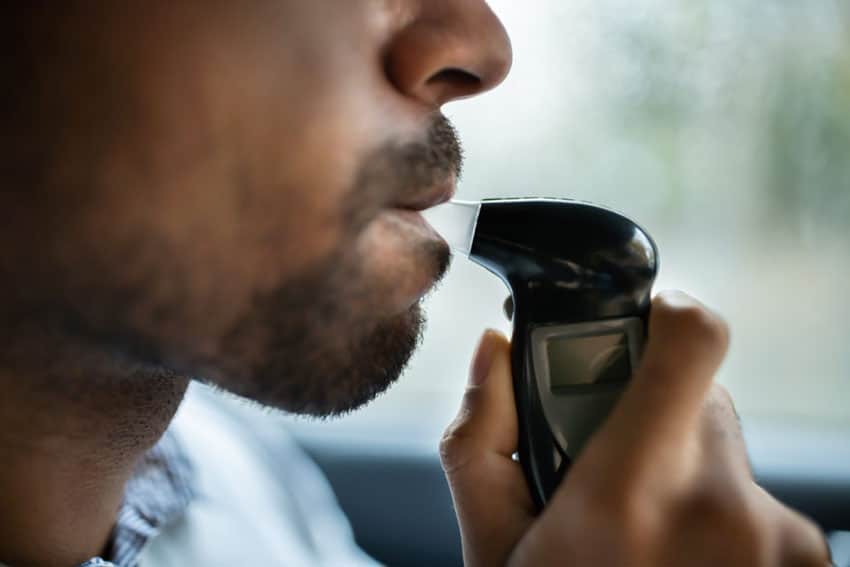
Under New York’s Implied Consent law, VTL §1194, police are authorized to administer a chemical test — breath, blood, or urine — based on what’s available and appropriate at the time. In practice, the DataMaster breath test at the station is the most commonly offered because it’s immediate, doesn’t require medical personnel, and produces a result the prosecution can use directly. For a detailed breakdown of how the Chemical Breath Test works and the consequences of refusal, the mechanics matter here.
If you ask to take a blood test instead of the breath test the officer is offering, you’re not exercising a legal right — you’re attempting to dictate the terms of an investigation you have no right to control. The officer’s standard response will be to treat that as a refusal of the offered test, and the refusal consequences follow: immediate license suspension, minimum one-year revocation and civil penalties, and the refusal being used as evidence against you at trial.
The Right You Actually Have: Independent Testing
What New York law does provide — and what is genuinely useful — is the right to have a qualified person of your own choosing administer an additional chemical test, at your own expense, after you’ve already taken the official test.
This matters for several reasons:
| Scenario | How Independent Testing Helps |
|---|---|
| You believe the DataMaster reading was artificially high | An independent blood draw taken close in time provides a comparison point your attorney can use |
| You have a medical condition affecting breath test accuracy | Blood testing bypasses the respiratory pathway entirely and may produce a different result |
| Your BAC was close to 0.08% | A blood test taken shortly afterward — accounting for BAC’s continuing drop — can establish where you actually were at the time of driving |
| Defense preparation | An independent result forces the prosecution to defend the gap between the two readings |
The timing is critical. New York’s two-hour rule for chemical test admissibility means the clock starts running at arrest — and your BAC continues to drop the whole time. Your attorney’s first action after you’re processed is often to arrange for this independent blood draw while the evidence is still fresh. Once significant time has passed, the independent test loses much of its comparative value.
What “Reasonable Opportunity” Means
New York courts have held that if you submit to the police’s chemical test, you must be afforded a reasonable opportunity to arrange for your own test. That doesn’t mean the police have to arrange it for you — it means they can’t prevent you from calling someone to come do it. If police actively obstruct your attempt to obtain an independent test after you’ve already taken theirs, that’s a violation of your rights and a potential suppression issue.
In practice, this means: take the official test, then immediately tell the officer you want to arrange an independent blood test. Ask to make the call. Document that you made the request. Under NY DCJS guidelines, the implied consent framework gives police authority to administer the test — but that framework also carries obligations to the driver once the official test is complete.
The Breath Test Challenge Angle
Even without an independent test, a breath test result is not bulletproof. Defense challenges routinely target the accuracy of the breathalyzer, the calibration records of the DataMaster, whether the officer followed the mandatory 15-to-20-minute observation period before testing, and whether mouth alcohol or a medical condition affected the reading. GERD, dentures, and residual mouth substances are all documented sources of artificially elevated breath test results.
A blood test — whether the official one or an independent one — is generally considered more accurate than a breath test because it directly measures alcohol concentration rather than converting a breath sample through an estimated conversion ratio. If the prosecution has only a breath test result, there’s more room for the defense to challenge the science.
What This Means After an Arrest
If you’re facing a first offense DWI and the testing in your case involved borderline readings or any irregularities in the observation period or DataMaster calibration, those are all areas worth examining. Knowing what to do after a DWI arrest — including whether to pursue independent testing immediately — is often the most consequential decision of the case timeline.
Choosing the right DWI defense attorney for a test-challenge case requires someone who understands forensic science, not just courtroom procedure. The two are different skill sets, and cases that turn on BAC evidence need both.
Our DWI defense team can evaluate whether the test results in your case are challengeable and whether independent testing is still an option.
Disclaimer: This overview is for informational purposes only and does not constitute legal advice. Every case is unique — contact our DWI defense team for personalized guidance.