




If you’ve been charged with DWI in New York, you may have noticed your paperwork references more than one charge. That’s because New York actually recognizes two distinct types of DWI, and understanding the difference between them is more important than most people realize.
Let’s break down what common law DWI and per se DWI actually mean, how the police prove each one, and why it matters for your defense.
Two Charges, One Statute
Both types of DWI fall under New York Vehicle and Traffic Law § 1192, but they’re separate subsections with different rules of proof.
| Per Se DWI — VTL § 1192(2) | Common Law DWI — VTL § 1192(3) | |
|---|---|---|
| What it means | Your BAC was 0.08% or higher | You were visibly intoxicated |
| How it’s proven | Chemical test result (breath, blood, urine) | Officer observations and testimony |
| BAC required? | Yes — must be at or above 0.08% | No — no specific number needed |
| Key evidence | Breathalyzer or blood test result | Slurred speech, bloodshot eyes, failed field sobriety tests, and driving behavior |
| Penalties | Unclassified misdemeanor (first offense) | Unclassified misdemeanor (first offense) |
Source: N.Y. Vehicle and Traffic Law §§ 1192 and 1193.
The penalties for both charges are identical — up to 364 days in jail, fines between $500 and $1,000, a minimum six-month license revocation, mandatory ignition interlock device installation, and a permanent criminal record. The real difference is in how the prosecution builds its case.
Per Se DWI: The Number Speaks for Itself
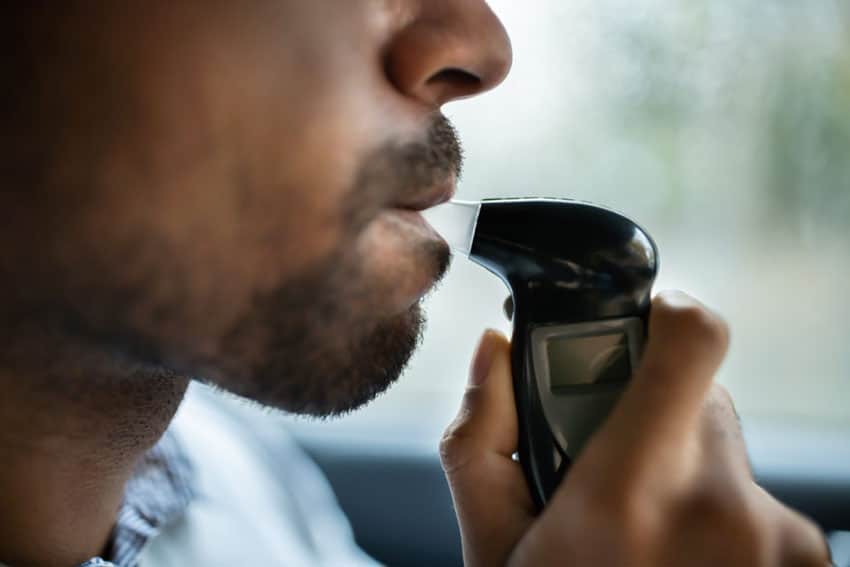
“Per se” is Latin for “in itself.” In this context, it means the BAC number alone is enough to prove intoxication, which is why understanding how a breathalyzer actually works matters so much for per se cases. If a chemical test shows your blood alcohol content was at or above the legal BAC limit in New York, the prosecution doesn’t need to prove anything else about your behavior or driving.
It doesn’t matter if you passed every field sobriety test perfectly. It doesn’t matter if your driving was flawless. The number is the evidence.
This is why, per se, DWI charges are often considered the more straightforward case for prosecutors — the chemical test result does most of the heavy lifting.
Common Law DWI: The Officer’s Observations
Common law DWI works differently. Under VTL § 1192(3), the prosecution must show that you were operating a motor vehicle “while in an intoxicated condition” — but there’s no specific BAC threshold required.
Instead, the case relies on what the arresting officer saw, heard, and documented. Typical evidence includes things like the odor of alcohol on your breath, slurred or incoherent speech, bloodshot or watery eyes, difficulty with balance or coordination, poor performance on field sobriety tests, and erratic driving behavior before the stop.
This is the charge most often used when someone refuses the chemical test. Without a BAC number, the prosecution can’t bring a per se charge — but they can still pursue a common law DWI based entirely on the officer’s testimony.
Why Are People Usually Charged With Both?
Here’s something that catches a lot of people off guard: most drivers are charged with per se DWI and common law DWI at the same time.
Why? It’s a strategic move by prosecutors. If the breathalyzer result gets thrown out — maybe due to a calibration issue, an operator error, or a violation of the required observation period — they still have the common law charge to fall back on. And if the officer’s testimony falls apart at trial, the BAC number still supports the per se charge.
Think of it as the prosecution’s insurance policy. Charging both types covers their bases regardless of what happens with the evidence. This dual-charge approach can even apply when you’re sleeping in your car — a scenario most people don’t see coming.
How Does This Affect Your Defense?
The type of DWI you’re facing — or more accurately, the type of evidence behind it — shapes the entire defense strategy.
Defending against a per se charge typically involves challenging the science. Was the breathalyzer machine properly calibrated? Did the officer follow the mandatory 15-to-20-minute observation period? Could medical conditions like GERD or diabetes have inflated the reading? Was the test administered within the legally required timeframe?
Defending against a common law charge is more about challenging the officer’s subjective observations. Were the field sobriety tests administered correctly? Could poor balance be explained by fatigue, uneven pavement, or a medical condition? Is there dashcam or body camera footage that contradicts the officer’s account?
In cases where both charges are filed, a DWI defense attorney will typically challenge every piece of evidence across both charges — the goal being to weaken the prosecution’s case on all fronts, whether that leads to a reduction, a dismissal, or a favorable plea to DWAI.
The Bottom Line
Common law DWI and per se DWI carry the same penalties but rely on completely different types of proof. Per se is about the number on the test. Common law is about what the officer observed. Most people get charged with both, and understanding that distinction is the first step toward building an effective defense.
If you’re facing either type of charge — or both — the details of how the evidence was gathered matter enormously. A first-offense DWI in New York is a criminal charge with long-lasting consequences, and the right defense strategy depends on knowing exactly what you’re up against.
Disclaimer: This overview is for informational purposes only and does not constitute legal advice. Every case is unique—contact our New York DWI lawyers for personalized guidance.