




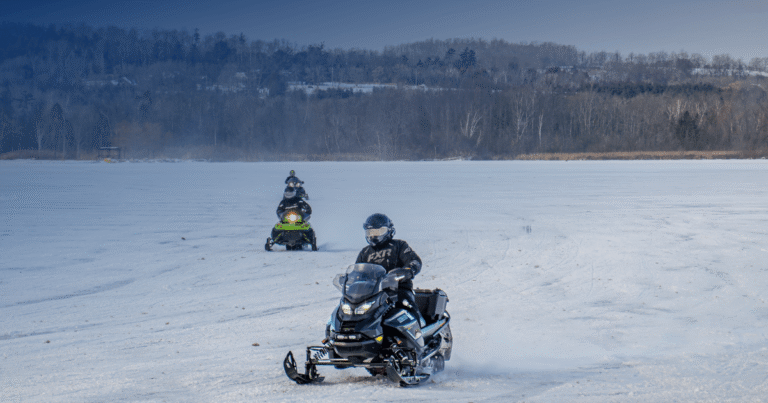
Snowmobiling While Intoxicated (SWI) is a criminal charge under New York law — not a traffic ticket, not a minor infraction. The penalties follow a structure very similar to DWI on the road, starting with fines and jail exposure on the first offense and escalating to felony territory on the third.
If you’re facing an SWI charge, or just want to understand the risk before heading out on the trails, here’s what the law actually says.
The BAC Threshold Is the Same as DWI
The legal limit for operating a snowmobile is 0.08% BAC — identical to the standard for driving a car. If your BAC hits that number, you can be charged with SWI per se, meaning the number itself is enough without the prosecution needing to prove you appeared impaired. SWI also covers drug impairment, so it doesn’t matter whether the substance is alcohol, a prescription medication, or anything else — if it impaired your ability to operate the snowmobile, you can be charged.
The same 0.08% threshold applies here, and enforcement happens on the trails just as traffic enforcement happens on roads. New York’s DEC actively patrols snowmobile trails during the winter season — enforcement is not theoretical.
Penalty Structure by Offense
New York’s SWI penalties escalate significantly with each conviction under Parks, Recreation and Historic Preservation Law §25.24:
| Offense | Classification | Jail Exposure | Fine Range | Snowmobiling Privileges |
|---|---|---|---|---|
| First offense | Misdemeanor | Up to 90 days | $350 – $500 | Suspended |
| Second offense (within 10 years) | Misdemeanor | Up to 1 year | $500 – $1,500 | Suspended/Revoked |
| Third offense (within 10 years) | Class E Felony | Up to 4 years state prison | $500 – $5,000 | Revoked |
Source: N.Y. Parks, Recreation and Historic Preservation Law § 25.24.
The jump from second to third offense is where things become genuinely life-altering. A Class E Felony in New York carries real state prison exposure — not county jail — along with a permanent felony record. Under the 2026 DMV rule changes, any alcohol-related conviction now also carries automatic 11-point DMV consequences that run independently of the criminal penalty.
How an SWI Counts Against You Later
One of the most consequential aspects of an SWI conviction is how it counts in later cases. The snowmobile statute counts earlier snowmobile convictions within ten years, which is how a second SWI becomes a misdemeanor with up to a year of jail exposure and a third becomes a Class E felony.
An SWI conviction does not count as a prior for a DWI on the road. VTL § 1193(1)(c) raises a DWI to a felony only after an earlier conviction under § 1192 or a Penal Law conviction for vehicular assault or vehicular manslaughter, and snowmobile convictions appear in none of those categories. The same is true of a BWI, as we explain in our article on whether boating while intoxicated convictions count as priors for a DWI.
How SWI Enforcement Actually Works
New York law enforcement — primarily DEC Environmental Conservation Officers and State Police — actively patrols snowmobile trails during the winter season. Stops can happen on the trail the same way traffic stops happen on a road: an officer observes erratic operation, a complaint is called in, or enforcement is conducted at a known area.
Once stopped, the investigation mirrors a DWI stop. Officers look for the same observable signs of impairment (slurred speech, coordination issues, smell of alcohol) and can administer field sobriety tests and a breathalyzer. The implied consent rules that govern DWI chemical testing apply here as well — refusing the chemical test on a snowmobile carries its own set of consequences separate from the underlying SWI charge.
SWI Isn’t the Same as DWI — But the Defense Framework Overlaps
SWI falls under New York’s Parks, Recreation, and Historic Preservation Law rather than the Vehicle and Traffic Law, which means it operates on a slightly different statutory track than a standard DWI. But the evidentiary challenges are largely the same: was the stop lawful, were field sobriety tests properly administered, was the chemical test equipment calibrated correctly?
An experienced DWI defense attorney familiar with the broader structure of New York’s intoxicated operation laws — including how SWI and BWI charges work — is in the best position to evaluate those angles. The SWI service page covers the full charge framework, and understanding what to do after an arrest applies just as much here as it does for a standard road DWI.
This article is for general informational purposes and does not constitute legal advice. Every case is different — contact our DWI defense attorneys for guidance specific to your situation.