




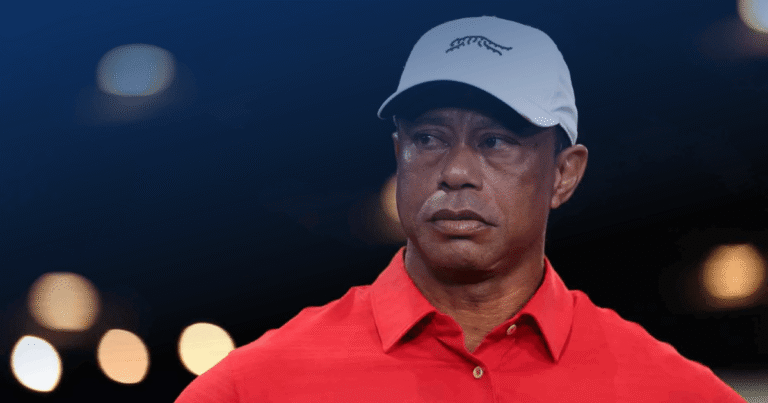
Tiger Woods didn’t crash because of alcohol.
That’s exactly why this story matters.
On March 27, 2026, Woods rolled his SUV while attempting to pass a truck on a Florida road. He walked away unharmed, but within hours, police arrested him and charged him with DUI.
Here’s what most people don’t realize: he blew a 0.00. No alcohol — and yet the charge still stuck.
If you’re in New York, prosecutors wouldn’t call that charge a DUI. Instead, it would fall under New York’s DWI laws, and more specifically, the state’s drug-impaired driving laws.
What This Would Look Like in New York
In Florida, the charge is called DUI. In New York, however, we use different terms — and they matter.
Based on what’s been reported, a similar situation in New York would most likely fall under:
DWAI–Drugs (Driving While Ability Impaired by Drugs)
This charge applies when a drug impairs a person’s ability to operate a vehicle. In a case involving suspected drug impairment and no alcohol, this is the most likely charge. You can read more about how DWAI–Drug charges work in New York and what prosecutors actually need to prove.
In some situations, charges can become more complex — especially when multiple substances are involved. New York also recognizes DWAI–Combination, which applies when alcohol and drugs together impair a driver’s ability.
That doesn’t appear to be the case here, given a 0.00 breath result, but it shows how broad New York’s impaired driving laws really are. Under NY Vehicle and Traffic Law § 1192, even prescription medications can form the basis for a drug-impaired driving charge.
| Charge | What It Requires | Alcohol? |
| DWAI–Alcohol | BAC between .05–.07 | Yes |
| DWAI–Drugs | Impairment by any drug | No |
| DWAI–Combination | Impairment by drugs + alcohol together | Both |
| DWI | BAC .08 or higher | Yes |
Why This Would Not Be Alcohol-Related in New York
Woods registered a 0.00 on a breath test, so the analysis shifts entirely.
In New York, that means:
- Prosecutors could not pursue an alcohol-based DWI
- Instead, the focus moves entirely to drugs or medication
- That includes prescription medications, painkillers, sleep aids, or any substance that affects your ability to safely operate a vehicle.
Importantly, DWAI–Drugs carries the same penalties as a standard DWI — potential jail time, license revocation, and a criminal record — even though no alcohol is involved.
The Key Factor: Refusing the Chemical Test
One of the most critical details in this case is that Tiger Woods refused a urine test.
In New York, that decision carries immediate consequences. Under New York’s implied consent law, every driver already agrees to submit to chemical testing simply by driving on public roads. As a result, refusing that test comes at a steep cost.
Specifically, if you refuse a chemical test in New York:
- Your license faces automatic suspension, often at arraignment
- You must attend a separate DMV refusal hearing
- You can lose your license for at least one year — even if you win the criminal case
- Prosecutors can use the refusal against you in court
For more details on what that process looks like, the DWI chemical test refusal page walks through exactly what happens at each stage.
Crucially, a refusal doesn’t end the case — in many situations, it makes things more complicated. Without a chemical test, prosecutors instead build their case on:
- Officer observations
- Driving behavior
- Field sobriety test results
How These Cases Actually Happen
This wasn’t chaos. It was a normal driving decision made at the wrong moment — trying to pass a vehicle, misjudging the space, and losing control.
That’s how most of these cases start. Not always recklessness — sometimes it’s impairment, and sometimes people face accusations without being guilty. Either way, it’s worth understanding what it actually takes to beat a DWI or DWAI charge in New York before assuming a charge equals a conviction.
What New York Drivers Need to Understand
| Situation | What Can Happen in New York |
| 0.00 BAC but took medication | Still chargeable under DWAI–Drugs |
| Refused urine/blood test | Automatic license suspension + DMV hearing |
| No chemical test at all | Case still proceeds based on observations + FSTs |
| Prescription drug use | Absolutely qualifies as a “drug” under NY law |
If this happened in New York, the most likely charge would be DWAI–Drugs — and the consequences would be serious regardless of whether alcohol played any role at all.
How the DWI TEAM Would Approach a Case Like This
Every case like this comes down to one thing: proof.
Not assumptions, not headlines, not public opinion — only what prosecutors can actually prove in court. In a situation like this, a strong defense focuses on several key areas:
Challenging the Evidence of Impairment
Without a chemical test, prosecutors rely heavily on observations. That means the defense examines what the officer actually saw, whether those observations were accurate, and whether they genuinely indicate impairment. Because drug impairment is far more subjective than a BAC number, that subjectivity creates meaningful room to challenge the prosecution’s case.
Breaking Down the Stop and Investigation
Every procedural step matters — why the officer stopped the vehicle, how the investigation unfolded, and whether proper procedures were followed throughout. Any misstep can directly affect what evidence the court allows.
Attacking the Field Sobriety Tests
Fatigue, stress, environment, and physical conditions that have nothing to do with impairment can all influence these tests. Because officers frequently misinterpret the results, a strong DWI defense never accepts them at face value — instead, it scrutinizes exactly how officers administered and scored each test.
Addressing the Refusal
A refusal does not equal guilt. The key questions become whether officers properly documented the refusal and whether they clearly warned the driver of the consequences beforehand. If the proper warnings weren’t given, the refusal itself becomes challengeable.
Focusing on the Individual, Not the Assumption
Every case has a story behind it. Medical conditions, fatigue, stress, or entirely innocent explanations can all mimic the appearance of impairment. Since the drug-related offense landscape in New York is genuinely complex, a cookie-cutter defense won’t cut it — each case deserves a strategy built around the specific facts and the specific person involved.
The Reality
Not every case is what it looks like on the surface, and not every arrest leads to a conviction. Furthermore, not every person facing a charge is actually guilty.
Tiger Woods’ situation is a useful reminder that impaired driving charges in New York extend well beyond alcohol. Ultimately, these cases are about impairment — and New York defines that more broadly than most people expect.
That’s precisely why having the right defense team matters.
Disclaimer: This overview is for informational purposes only and does not constitute legal advice. Every case is unique — contact an experienced DWI lawyer for personalized guidance.