




If police suspect you of driving under the combined influence of alcohol and drugs, the testing process follows a specific sequence — and it is more involved than a standard DWI stop. Understanding how that sequence works matters because each step is a potential point of challenge.
Step One: The Breathalyzer
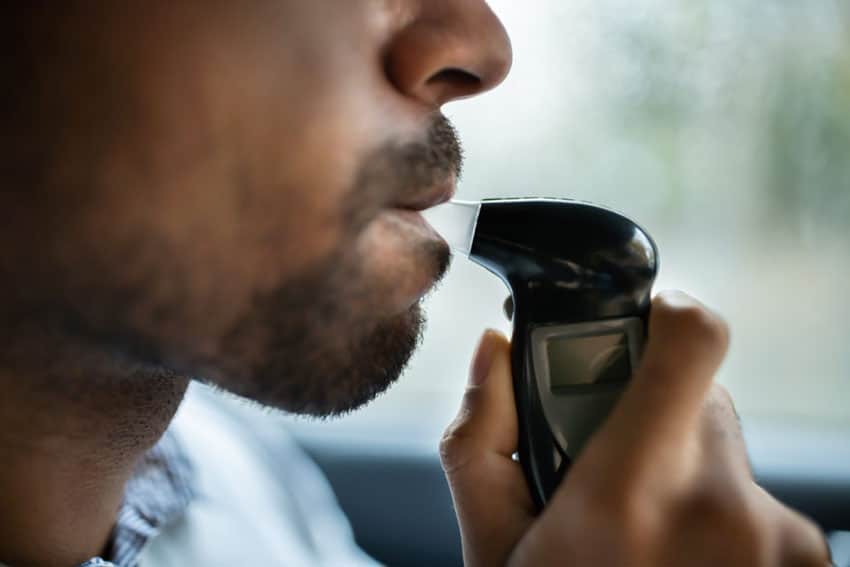
Every combination impairment investigation starts with a breath test. The officer administers a breathalyzer to measure your blood alcohol content (BAC). Breathalyzers have known accuracy limitations — and in a DWAI-Combination case, the BAC typically comes back below 0.08%, not enough to support a standard DWI charge on its own, but enough to establish that alcohol is a factor.
That low reading is actually what triggers the next phase. When a driver appears clearly impaired, but the BAC doesn’t explain the degree of impairment, officers are trained to treat that gap as a signal that drugs may also be involved.
Step Two: Standardized Field Sobriety Tests
After the breath test, the officer will administer Standardized Field Sobriety Tests (SFSTs) — the three-test battery developed by NHTSA. These are the Horizontal Gaze Nystagmus (HGN) test, the Walk-and-Turn, and the One-Leg Stand. It is worth knowing that in New York, you have the right to refuse field sobriety tests without triggering the same automatic license penalties as refusing a chemical test.
In a combination case, the officer is paying close attention to performance that seems inconsistent with or greater than what the BAC alone would suggest. Unusual pupil response, difficulty tracking, muscle rigidity or flaccidity, and atypical balance problems can all point toward drug involvement. Certain medications and health conditions can produce these same signs without any drug impairment — a key defense angle.
Step Three: The Drug Recognition Expert Evaluation
If the SFSTs reveal impairment that the BAC doesn’t account for, the officer will call in a Drug Recognition Expert (DRE). This is a specially trained officer who follows the same protocol used to establish how police test for drug impairment — a 12-step evaluation designed to identify not just whether a driver is impaired by drugs, but which category of drug is likely responsible.
The evaluation includes:
- A second breathalyzer to rule out further alcohol involvement
- An eye examination, including HGN, lack of convergence, and pupil size under different lighting conditions
- Divided-attention field sobriety tests (Romberg Balance, Walk and Turn, One-Leg Stand, Finger-to-Nose)
- Vital signs — pulse, blood pressure, and body temperature
- A muscle tone assessment and examination for injection sites
- A brief medical history and behavioral observations throughout
The DRE then forms an opinion about which drug category — depressants, stimulants, cannabis, narcotics, hallucinogens, dissociative anesthetics, or inhalants — is most consistent with the observed signs.
Step Four: Chemical Testing
Following an arrest, law enforcement requests a blood or urine test to confirm the presence of drugs in your system. Under New York VTL § 1192(4-a), the charge requires both chemical confirmation that a drug was present and evidence that the combined influence impaired your ability to drive. You can refuse both breath and drug testing, but refusal carries mandatory license penalties regardless of the criminal case outcome.
Crucially, the chemical test only confirms presence — not impairment at the time of driving. That distinction is a significant area for defense.
Why This Process Creates Real Defense Opportunities
Every step in this sequence has to be done correctly. Our attorneys scrutinize:
- Whether the SFSTs were administered per NHTSA standards
- Whether the DRE was properly certified and followed protocol
- Whether the chemical test was collected, handled, and analyzed correctly
- Whether the observed signs of impairment had innocent medical explanations
Understanding how DWAI-Drugs differs from an alcohol DWI is also important here, because the lack of a per se drug threshold means the entire case turns on the subjective observations of the DRE, which are challengeable. The penalties for DWAI-Drugs versus DWI are comparable — misdemeanor on a first offense, escalating to a felony — and whether a conviction becomes a felony depends heavily on prior record.
The DWI TEAM has handled DWAI-Combination cases across New York State. If you’re facing this charge, contact us to go through the details of your stop and build the strongest possible defense from the start.
Disclaimer: This overview is for informational purposes only and does not constitute legal advice. Every case is unique — contact our legal team for personalized guidance.