





When it comes to impaired driving, different states use different legal terminologies to describe the offense. OWI and DWI are acronyms that refer to various charges related to operating or driving a vehicle while impaired by alcohol or drugs. Understanding the distinctions between these terms is crucial for legal clarity and awareness.

OWI vs DWI: Understanding the Acronyms
OWI (Operating While Intoxicated):
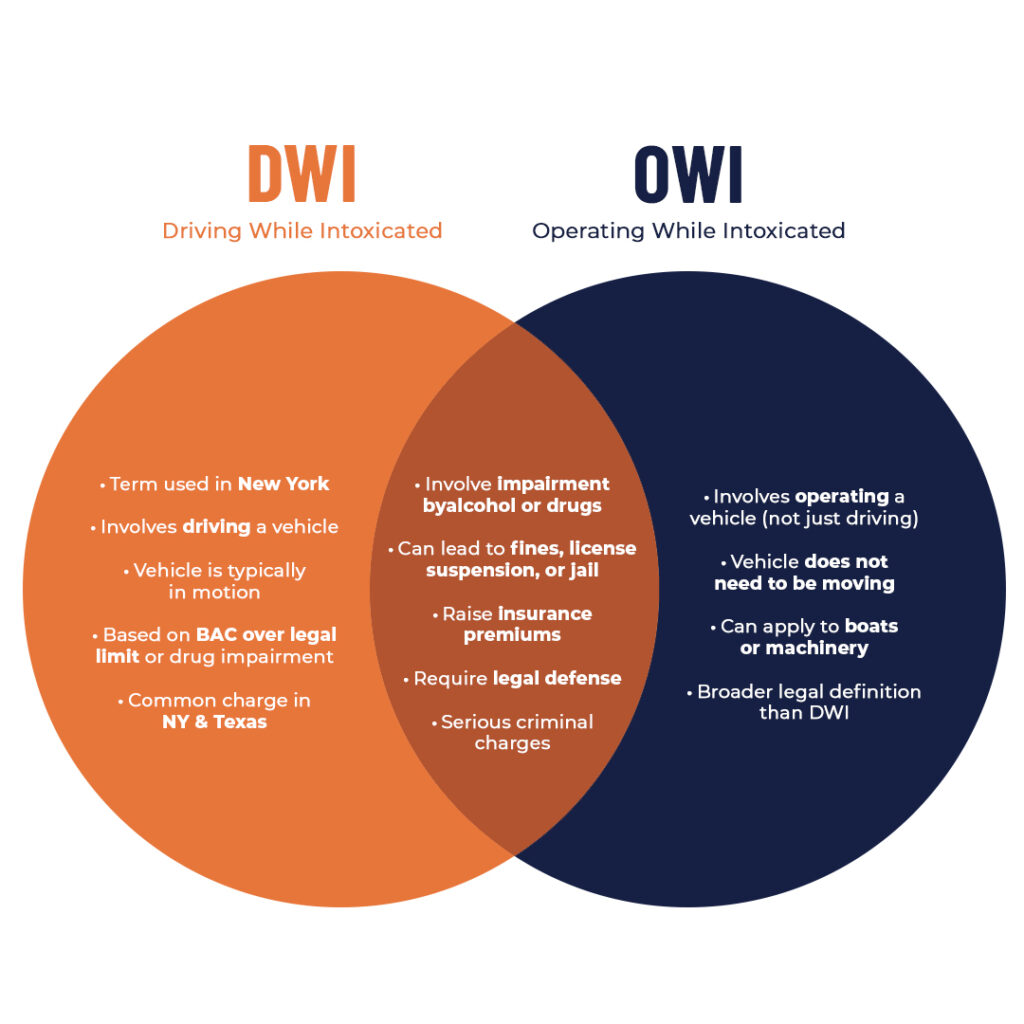
- Definition: OWI stands for Operating While Intoxicated. It is a term commonly used in states like Wisconsin and Indiana.
- Scope: OWI encompasses operating any motor vehicle while impaired by alcohol or drugs. This term is broader than DUI and DWI because it covers not only driving but also operating other types of vehicles such as boats or heavy machinery.
- Focus: The emphasis is on the act of operating a vehicle while intoxicated, regardless of whether the vehicle is in motion.
DWI (Driving While Intoxicated or Driving While Impaired):
- Definition: DWI stands for Driving While Intoxicated or Driving While Impaired. This term is used in several states, including Texas and New York.
- Scope: DWI specifically refers to driving a motor vehicle with a blood alcohol concentration (BAC) over the legal limit or being impaired by drugs.
- Focus: The primary focus is on driving under the influence, which usually involves moving the vehicle.
Key Differences and Similarities
Difference Between DWI and OWI:
- Jurisdiction: DWI is often used in states like New York and Texas, while OWI is more common in states like Wisconsin and Indiana.
- Scope: OWI can be broader, covering the operation of any vehicle while intoxicated, not just driving.
- Terminology: The terms are largely interchangeable but reflect regional legal language preferences.
 Practical Implications
 Practical Implications
- Legal Definition: OWI tends to be used for a broader range of activities, while DWI is more narrowly focused on driving.
- Regional Preferences: The difference is often one of regional legal terminology rather than substantive legal distinction.
Conclusion
Understanding the difference between OWI and DWI is essential for anyone dealing with impaired driving laws. While the terms may vary by state, the fundamental concept remains the same: operating or driving a vehicle while impaired by alcohol or drugs is illegal and carries serious consequences. Knowing the specific terminology and legal implications in your state can help in navigating these laws more effectively and ensuring compliance.