




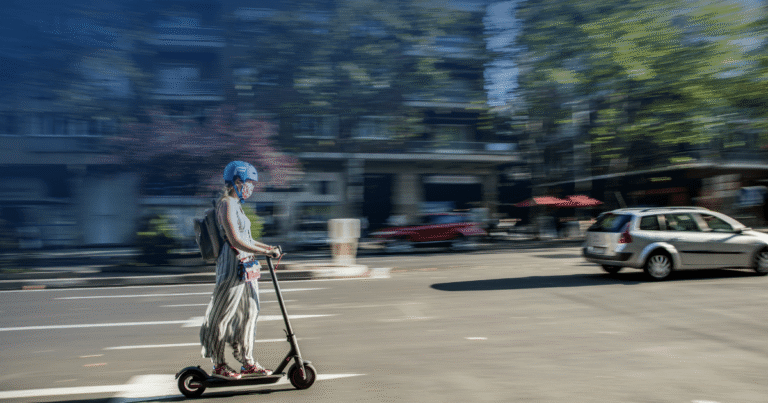
Yes, and it’s not a gray area. Electric scooters and many e-bikes are explicitly covered under New York law, which means operating one while intoxicated can result in the same DWI charge you’d face behind the wheel of a car.
This surprises a lot of people. The assumption is that something small and slow can’t possibly trigger a DWI. But the law doesn’t care about size or speed — it cares about whether the device is motor-propelled. And electric scooters and e-bikes are.
Why Electric Scooters and E-Bikes Are Treated as Motor Vehicles
New York’s Vehicle and Traffic Law defines a motor vehicle as any device propelled by something other than muscular power. That definition is broad by design, and it covers far more than cars and trucks.
Electric scooters fall under this directly. VTL § 1289 explicitly makes it illegal to operate an electric scooter while intoxicated or ability-impaired. There’s no ambiguity — the legislature addressed e-scooters specifically, and the answer is that the same DWI rules apply.
E-bikes are slightly more nuanced because New York classifies them into three categories based on their power and speed:
| E-Bike Class | Max Speed (Motor Assist) | Motor-Propelled? | DWI Applies? |
|---|---|---|---|
| Class 1 (pedal-assist only) | 20 mph | Only when pedaling | Potentially — courts look at how it was being operated |
| Class 2 (throttle-assist) | 20 mph | Yes — can move without pedaling | Yes |
| Class 3 (speed pedal-assist) | 25 mph | Only when pedaling | Potentially — higher risk given speed |
The practical takeaway: if the device can propel you forward without you pedaling, it’s almost certainly going to be treated as a motor vehicle for DWI purposes. Even Class 1 pedal-assist bikes can get complicated depending on how the officer characterizes what they observed. The NY DMV’s guidance on electric scooters and e-bikes lays out where these devices are legally permitted to operate — and notably, that’s the same framework law enforcement uses when they stop an operator.
This is the core difference from a traditional bicycle, which runs entirely on muscular power and is explicitly excluded from DWI coverage under New York law. You won’t face a DWI charge for riding a standard bike while drunk — but the moment a motor is involved, that protection disappears.
It’s also worth noting this isn’t unique to scooters and e-bikes. New York courts have extended the motor vehicle definition to cover dirt bikes, ATVs, snowmobiles, and even a motorized beer cooler. The history of how courts have handled motorized device DWI charges shows just how broadly this definition gets applied.
The Penalties Mirror a Standard DWI
If you’re charged with DWI on an electric scooter or e-bike in New York, the penalties are the same as if you were driving a car:
| First-Offense DWI | |
|---|---|
| Jail | Up to 1 year |
| Fine | $500 – $1,000 |
| License Revocation | Minimum 6 months |
| Ignition Interlock Device | Mandatory (minimum 12 months) |
| Surcharges & Program Costs | Can push total well past $4,000 |
Source: N.Y. Vehicle and Traffic Law § 1193.
That includes a hit to your standard driver’s license — not just your scooter or biking privileges. A conviction for DWI on an e-scooter goes on your criminal record. More importantly, it counts as a prior DWI for lookback purposes, which means it can be used to elevate a future charge to a felony DWI if another offense occurs within the 10-year window.
On top of the license hit, New York mandates an ignition interlock device for DWI convictions — the device gets installed on any vehicle you drive, not just the one involved in the offense. That requirement follows you regardless of whether the original charge involved a car or a scooter.
For a deeper breakdown of what a first charge actually costs and what to expect in court, the first offense DWI overview covers the full picture.
NYC-Specific Rules Worth Knowing
New York City has its own regulations layered on top of state law. The NYC DOT’s e-bike and e-scooter framework generally permits Class 1, 2, and 3 e-bikes on roads and bike lanes, with a 15 mph speed cap for e-scooters in the city. E-scooters are also legal to operate in NYC as part of licensed shared scooter programs, but privately owned e-scooters face additional restrictions around where they can be ridden.
Operating an unregistered or uninsured device on public roads can add violations on top of any DWI charge. None of those additional violations helps your case — they give the prosecution more to work with and can complicate what happens to your license afterward.
What This Looks Like in Practice
The realistic scenario: someone leaves a bar late at night, decides an e-scooter is “not really driving,” and gets stopped by police who observe erratic operation or respond to an incident. Because the device is motor-propelled, implied consent kicks in — you’re subject to chemical testing, and refusing that test carries its own separate penalties, including automatic license revocation. The rest of the case plays out like any other per se DWI — the prosecution needs to show your BAC was at or above 0.08%, or that your ability to operate the device was impaired.
The “it’s just a scooter” defense doesn’t hold up. If you’re facing a charge like this, what matters is how the vehicle was classified, whether the stop was lawful, and how the testing was handled. If you’ve already been charged and aren’t sure what to do next, understanding your options after a DWI arrest is a reasonable starting point. And if this isn’t your first offense, the stakes around a second conviction are significantly higher — prior convictions within 10 years move the charge from a misdemeanor into felony territory.
Disclaimer: This overview is for informational purposes only and does not constitute legal advice. Every case is unique — contact DWI TEAM for personalized guidance.