




Most people know that getting behind the wheel after drinking can lead to a DWI. Fewer people realize that the same rules apply when you’re behind the helm of a boat. In New York, operating a motorized vessel while intoxicated is a criminal offense called BWI—Boating While Intoxicated—and the consequences are more serious than a lot of boaters expect.
Under New York Navigation Law § 49-a, BWI carries penalties that closely mirror a standard DWI. It’s not a slap on the wrist, and it’s not a ticket. It’s a misdemeanor crime that creates a permanent criminal record.
How New York Defines BWI
BWI works essentially the same way DWI does on the road. If you’re operating a motorized vessel—anything from a fishing boat to a jet ski to a pontoon—with a blood alcohol content of 0.08% or higher, you can be charged with BWI.
Just like with a standard DWI charge, there are actually two ways you can be charged. There’s the “per se” version, which is based purely on your BAC number (0.08% or above, the number speaks for itself). And there’s the “common law” version, where officers prove intoxication through their observations, your behavior, and field sobriety testing—even if your BAC comes in under the limit.
For commercial vessels like ferries or charter boats, the BAC threshold drops to 0.04%, matching the stricter standard applied to commercial drivers on the road.
What Vessels Does BWI Cover?
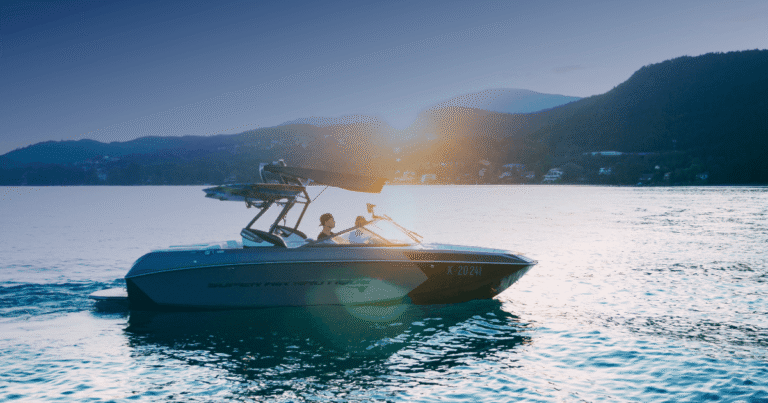
BWI applies to motorized vessels only. That includes motorboats, speedboats, jet skis (personal watercraft), pontoon boats, and sailboats with auxiliary engines.
If you’re wondering about kayaks, canoes, or paddleboards—those don’t fall under BWI law. You can’t be charged with BWI for paddling a kayak after a few beers. That said, drinking heavily on any watercraft is genuinely dangerous. Drowning is always a risk, even if criminal charges aren’t.
It’s also worth noting: passengers on a boat are perfectly fine to drink. The law only applies to whoever is operating the vessel. Just make sure you’re never the one who takes the wheel after you’ve been drinking.
BWI vs. BWAI: What’s the Difference?
New York has two tiers of boating-related alcohol charges, and they mirror the road-based system almost exactly:
| Charge | BAC Range | Classification | Comparable Road Offense |
|---|---|---|---|
| BWAI (Boating While Ability Impaired) | 0.05% – 0.07% | Traffic infraction | DWAI |
| BWI (Boating While Intoxicated) | 0.08% or higher | Misdemeanor crime | DWI |
Source: N.Y. Navigation Law § 49-a.
BWAI is the lesser charge—a traffic infraction for operating with a BAC between 0.05% and 0.07%. It carries up to 15 days in jail, fines, and a suspension of your boating privileges. It’s less severe than BWI, but it’s still a legal headache you want to avoid.
BWI is the serious one. It’s a full misdemeanor crime with real consequences.
BWI Penalties in New York
The penalties for a first BWI conviction track closely with what you’d face for a first-offense DWI:
First Offense (Misdemeanor):
- Up to 1 year in jail
- Fines of $500 to $1,000
- Mandatory surcharge
- Suspension of boating privileges for 6 to 12 months
- Permanent criminal record
- Mandatory completion of a boating safety course
Second Offense Within 10 Years (Class E Felony):
- Up to 4 years in state prison
- Fines of $1,000 to $5,000
- Boating privilege suspension of 24 months or more
Third Offense Within 10 Years (Class D Felony):
- Up to 7 years in state prison
- Fines of $2,000 to $10,000
- Extended boating privilege revocation
The escalation pattern here is identical to how repeat DWI offenses are treated—and the 10-year lookback period works the same way.
Does a BWI Affect Your Driver’s License?
This is one of the most common questions we hear, and the answer right now is: no, not directly. A BWI conviction suspends or revokes your privilege to operate a vessel, but it does not currently trigger a suspension of your automobile driver’s license.
That said, there’s important context. The New York legislature has repeatedly introduced bills, such as Senate Bill S200, that would link BWI penalties to your driver’s license in the same way DWI does. This legislation has been reintroduced in the 2025 session and could change the landscape at any time.
For a deeper look at how this works currently, see our article on whether a BWI affects your driver’s license.
The Crossover Effect: A Prior DWI Counts at a BWI Sentencing
Here’s the piece that catches people off guard. The law connects the road and the water in one direction today. Under Navigation Law § 49-a(5-a), a court sentencing a BWI must consider a prior DWI conviction within the lookback period, so a DWI from years ago can raise a BWI sentence.
A BWI conviction does not count as a prior offense for a future DWI charge. If you’re convicted of BWI this summer and then get a DWI three years from now, the DWI is charged as a first offense and stays a misdemeanor, because VTL § 1193(1)(c) lists only earlier § 1192 convictions and certain Penal Law convictions. A bill called Bryan Johnson’s Law (Senate Bill S258) would direct courts to consider a prior BWI when sentencing a DWI. It has passed the Senate and is waiting in the Assembly, so it is not law.
Why Field Sobriety Tests on the Water Are Problematic
One important thing that sets BWI cases apart from DWI cases is where and how the evidence is collected. Field sobriety tests were designed for solid ground. Asking someone to perform a walk-and-turn or one-leg stand on a rocking boat deck—after hours in the sun, wind, and waves—produces results that are inherently unreliable.
Factors like dehydration, sunburn, fatigue from being on the water, and the natural unsteadiness anyone feels after stepping off a boat can all mimic signs of intoxication. An experienced attorney knows how to challenge the reliability of those tests and push back on evidence that doesn’t actually prove impairment.
Chemical testing procedures also present challenges in the water. The timing and circumstances of how and when a chemical test is administered can create real openings for defense.
What to Do If You’re Charged With BWI
A BWI charge is a criminal matter, and it needs to be treated like one. The prosecution still has to prove that you were actually intoxicated at the time you were operating the vessel—and there are often more holes in that case than people realize.
Between the unreliability of on-water field sobriety tests, potential issues with chemical testing procedures, and questions about whether the stop itself was lawful, there are multiple avenues for an effective defense. That’s why having an attorney who understands both the criminal defense side and the specifics of Navigation Law matters so much.
If you’re facing a BWI charge, the worst thing you can do is assume it’s not that serious because it happened on the water instead of the road. The criminal record is the same. The felony risk for repeat offenses is the same. And the long-term impact on your life is just as real.
Disclaimer: This overview is for informational purposes only and does not constitute legal advice. Every case is unique—contact our New York DWI lawyers for personalized guidance.